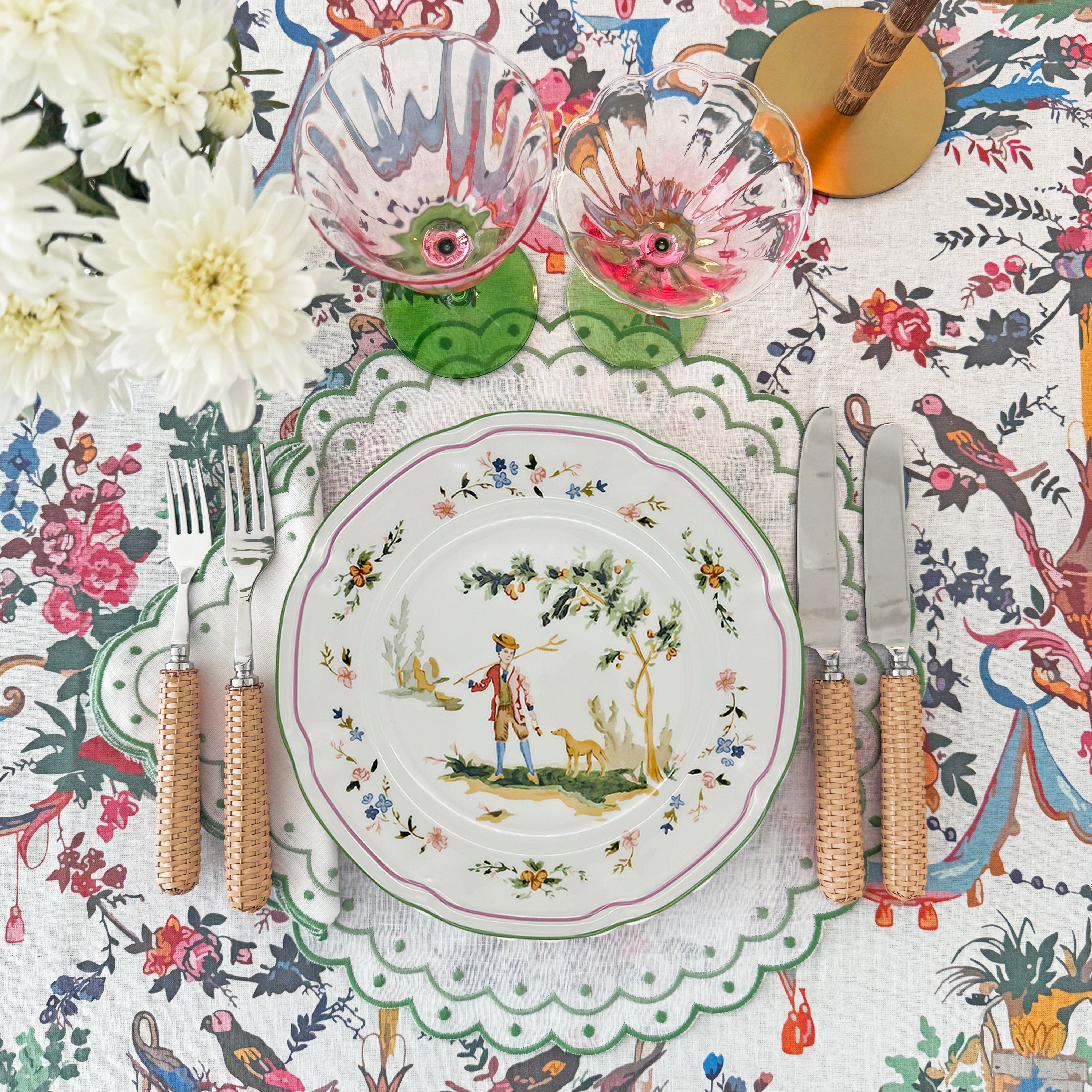

A clear wine glass does its job. Colored glassware sets a mood before the first pour.
That is the quiet charm of it. The right tinted coupe, goblet, or tumbler changes the table instantly, adding depth, personality, and a sense of occasion without asking much of the host. For anyone who loves a table that feels considered but never overworked, color in glass is one of the easiest ways to create that balance.
Why colored glassware feels so special
There is a reason colored glassware has such staying power. It carries a hint of nostalgia, a bit of European ease, and just enough decoration to make everyday rituals feel elevated. Water at lunch looks prettier in a pale green tumbler. A candlelit dinner feels warmer when amber stems catch the light. Even a simple place setting becomes more layered when the glassware contributes something beyond function.
Unlike louder tabletop statements, colored glass has range. It can read formal, playful, coastal, traditional, or quietly modern depending on the shade and shape. Soft blush and smoke feel refined. Cobalt and emerald bring confidence. Amber and olive lean collected and relaxed. That flexibility is what makes it so useful for hosts who want pieces that move easily from a weekday supper to a holiday table.
There is also a practical advantage. Colored glassware helps break up a table that feels too flat or too matched. If your dinnerware is neutral, it introduces contrast. If your linens are patterned, it can either echo a tone in the print or ground the setting with a richer accent. In other words, it does more than hold a drink. It finishes the room.
How to choose colored glassware for your home
The best approach is less about chasing a trend and more about deciding how you want your table to feel. If you tend to entertain with crisp white linens, tailored plates, and polished silver, jewel-toned stems can add a welcome sense of richness. If your style is more sun-washed and relaxed, look to softer hues like sea glass blue, pale pink, or light green.
Start with your entertaining style
Think first about the gatherings you host most often. If you regularly set the table for casual lunches, tumblers in a subtle tint may be the most versatile choice. They feel effortless, they stack beautifully into daily life, and they add color without formality. If you love a seated dinner with candles and layered courses, stemware brings more ceremony to the experience.
This is where it helps to be honest about use. A delicate hand-finished goblet may be beautiful, but if you reach for the dishwasher after every meal, that may not be your everyday answer. Luxury should still be livable.
Choose a palette, not a rainbow
One of the easiest mistakes with colored glassware is buying every pretty shade that catches your eye and hoping it all works together later. Sometimes that collected look is charming. Sometimes it feels visually busy.
A more graceful approach is to choose a family of colors that suits your home. That might mean staying within warm tones like amber, rose, and garnet, or keeping to cooler shades like blue, green, and smoke. You can still mix within that palette, but the table will feel intentional rather than accidental.
Let shape matter as much as color
Color gets the attention, but silhouette does just as much design work. A slender flute feels dressier than a rounded tumbler. A coupe suggests celebration. A footed goblet has a traditional ease that works especially well for layered entertaining.
If your dinnerware already has strong pattern or hand-painted detail, simpler glass shapes often create the best tension. If your plates and linens are quieter, a sculptural glass can carry more of the visual interest.
Styling colored glassware with confidence
The loveliest tables rarely feel overly coordinated. They feel composed, yes, but they also have breathing room. Colored glassware is most effective when it supports that sense of ease.
Pair color with restraint
If your glasses are richly tinted, let at least one other element stay calm. White dinnerware, woven placemats, natural linen, or simple flatware all give the eye a place to rest. This keeps the color from tipping into excess.
On the other hand, if your linens are patterned or your plates are hand-painted, choose colored glassware that picks up one note from the palette rather than competing with all of it. A green goblet can be enough. You do not need four colors at every place setting to make the table feel collected.
Use light to your advantage
Colored glassware comes alive in natural light and candlelight, which is part of its appeal. Morning sun through pale blue tumblers feels fresh and relaxed. Evening light through amber or ruby stems creates warmth almost instantly.
This matters when planning the rest of the table. Mirrored trays, polished flatware, and cordless lamps with a soft glow all play beautifully with tinted glass. The effect is subtle but memorable, which is often what the best entertaining details are.
Mix old and new thoughtfully
Colored glassware has a wonderful collected quality, even when it is newly made. That means it pairs easily with classic china, rattan accents, embroidered linens, or contemporary serving pieces. The tension between polished and relaxed is often what gives a table character.
If you are mixing styles, repeat one element so the setting feels cohesive. That could be color, shape, or finish. An assortment works best when there is still a thread running through it.
When to mix colors and when not to
Yes, you can mix colored glassware. No, it does not always improve the table.
For casual gatherings, mixing shades can feel spirited and welcoming, especially when the rest of the setting is simple. A lunch outdoors, a family-style dinner, or a celebratory brunch all benefit from that slightly relaxed energy. Different tones at each place setting can also help the table feel less rigid and more personal.
For more formal occasions, repetition usually looks stronger. One color of stemware repeated down the length of the table creates rhythm and polish. If you want variation, consider mixing shapes instead of hues, or use one colored water glass with a clear wine glass for balance.
It depends, too, on how much pattern is already present. If the plates, linens, and flowers are all making a statement, one consistent glass color often brings order. If the table is intentionally minimal, multiple shades may be the detail that gives it life.
The shades that work hardest
Some colors are simply easier to live with than others. Green is one of the most versatile because it behaves almost like a neutral while still offering character. It pairs beautifully with white ceramics, floral prints, natural textures, and holiday tables alike.
Amber has a flattering warmth that works across seasons. It feels sunlit in summer and candlelit in fall. Blue ranges widely - pale blue is airy and relaxed, while cobalt can be striking and quite formal. Pink is lovely when handled with restraint, especially in softer tones that read as elegant rather than sweet.
Smoke or gray deserves more attention than it gets. It brings depth without demanding much and works especially well in homes where the palette is understated. If you are uncertain where to begin, that is often a smart first choice.
Making colored glassware part of everyday life
The best tabletop pieces are not reserved so carefully that no one enjoys them. Colored glassware earns its place when it moves easily through daily routines as well as special occasions. A tinted tumbler by the bedside, a cheerful juice glass at breakfast, a beautiful goblet at a Tuesday supper - these small gestures make home feel more intentional.
That is part of what makes the category so appealing. It is decorative, certainly, but not precious in the wrong way. It invites use. It suggests that beauty belongs in the everyday, not only in the perfectly planned moments.
If you are building a collection, begin with what you will reach for most. A set of water glasses may serve you better than six coupes you use twice a year. Once that foundation is in place, you can add the pieces that bring a little more theater to the table.
At Duggan Society, that philosophy feels especially at home - entertaining pieces should be lovely, useful, and ready to be enjoyed often. Colored glassware does exactly that. It adds atmosphere without complication, and elegance without stiffness.
A well-set table does not need to announce itself loudly. Sometimes all it takes is a beautiful glass catching the light, making an ordinary gathering feel like one worth lingering over.