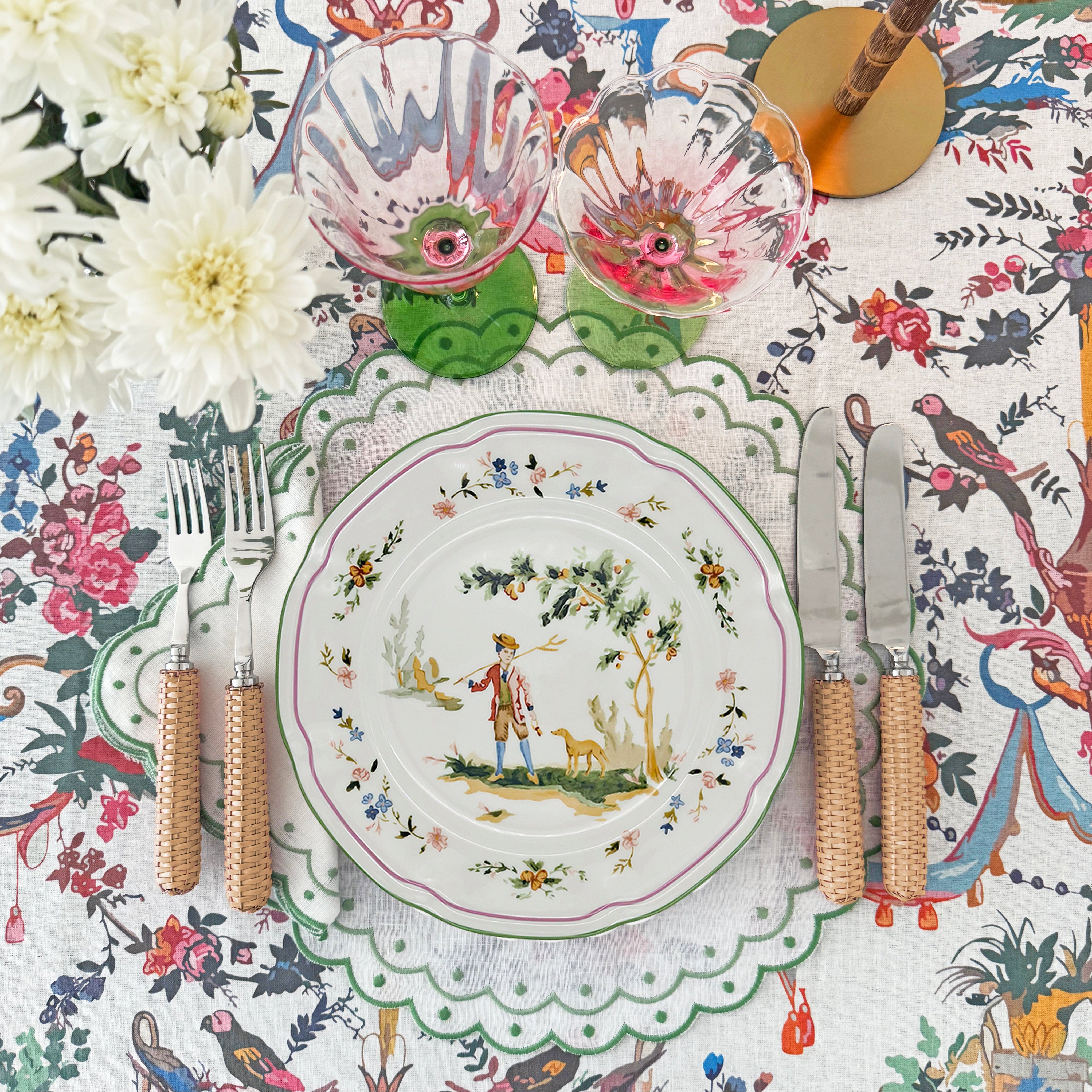

A hand woven placemat does more than give a glass or plate a place to land. Its texture catches the light, softens the formality of polished tableware, and makes even a simple gathering feel considered. That small irregularity in the weave - the evidence of human hands - is precisely what gives a table its warmth.
For the woman who believes life is meant to be shared, woven pieces offer an especially lovely balance. They feel relaxed enough for a weekday lunch with friends, yet composed enough to sit beneath hand-painted plates, candlelight, and fresh flowers at an evening gathering. They invite people to settle in.
What Hand Woven Details Bring to the Table
A beautifully set table should never feel overly rehearsed. It should have structure, certainly, but also ease. Hand woven pieces introduce that ease through natural texture. They break up the smooth surfaces of porcelain, glass, lacquer, and linen, adding dimension without asking for attention.
This is why a woven placemat or charger can be so transformative. It provides a visual foundation, framing each place setting and giving the eye a quiet place to rest. In a neutral room, it can bring warmth. In a colorful setting, it can ground pattern and keep the overall look from becoming too precious.
The character of a hand woven piece is also part of its appeal. Slight shifts in color, fiber, or spacing are not flaws to correct. They are the marks that make the piece feel collected rather than mass-produced. When the table includes something with a tactile, artisanal quality, the entire setting feels more personal.
Texture Makes Formality Feel Welcoming
There is a time for crisp symmetry and gleaming glassware, but texture keeps refinement from feeling distant. A woven base beneath a more formal place setting says that the occasion matters, while also making guests feel at home.
For a daytime table, consider a woven placemat with a printed linen napkin and a simple glass. The effect is cheerful and unfussy. For evening, layer the same woven foundation with a richer textile, a candlelit lamp, and more expressive tabletop pieces. The underlying texture remains consistent, but the mood becomes more polished.
That adaptability is what makes woven accessories so useful. They are not reserved for one season or one type of gathering. They move easily from a breezy porch lunch to a holiday table, from a family celebration to an impromptu glass of wine with neighbors.
Choosing Hand Woven Pieces With Lasting Appeal
Not every woven piece serves the same purpose. Some are designed to provide a clean, tailored outline at each place setting; others have a looser, more organic silhouette. Neither is inherently better. The right choice depends on the atmosphere you want to create and the pieces you already love.
A tightly woven placemat often reads as more tailored and graphic, particularly in a crisp round or rectangular shape. It works beautifully with patterned china because it offers visual order. A more open or textural weave feels softer and more relaxed, making it a natural companion for casual linens, colorful glassware, and arrangements gathered from the garden.
Color matters, too. Natural fibers in honey, straw, tobacco, or deep brown bring an enduring warmth that works across seasons. They are especially useful if your tabletop collection changes often, since they pair easily with blue-and-white, florals, greens, reds, and soft neutrals. Painted or richly colored woven pieces make a stronger statement and can become the starting point for the rest of the table.
Before choosing, think about scale. A generous placemat gives a fuller place setting room to breathe, while a smaller profile is often better for an intimate table where several guests are seated close together. The goal is not to fill every inch. It is to create a setting where each layer has a reason to be there.
Look for Craft, Not Perfection
The phrase hand woven is sometimes used broadly, so it is worth looking closely at construction and finish. A thoughtfully made piece should feel substantial in the hand and sit comfortably on the table. Its edges should be neatly finished, even if the shape retains a gentle, organic variation.
Natural materials may shift slightly over time, particularly when exposed to heat, humidity, or strong sunlight. This is part of the trade-off for choosing fibers with genuine texture and character. If you prefer a more uniform appearance, select a tighter weave or a structured material. If you are drawn to the beauty of natural variation, embrace the small changes that make the piece distinctly yours.
A woven accent should also earn its place through usefulness. Placemats protect the table while defining each setting. Woven trays make a drinks station, entry table, or coffee table feel composed. A beautifully woven bag can travel from a weekend visit to a luncheon with effortless style. The best pieces are decorative, yes, but they are made to be lived with.
Layering Woven Texture Without Overdoing It
One woven element can carry a great deal of atmosphere. There is rarely a need to match every texture at the table. In fact, a setting becomes more interesting when woven placemats meet crisp linen napkins, glossy ceramic pieces, and clear or colored glass.
Start with the woven layer, then choose one additional tactile detail. It might be a scalloped linen, a rattan-wrapped glass, or a candle in a sculptural vessel. This restraint allows each material to register. When too many natural textures compete, the table can feel busy rather than collected.
Pattern follows a similar rule. If your placemat has a strong border or a colorful weave, give it room by pairing it with a quieter plate or napkin. If your woven foundation is neutral, it can support bolder florals, stripes, painted ceramics, and playful napkin rings. A table does not need every piece to speak at once.
The same principle applies beyond the table. A woven tray beside a rechargeable lamp can lend a guest room or sitting area the feeling of a well-prepared welcome. A woven accessory near a stack of books or a fresh arrangement adds softness to more structured furnishings. These details create continuity throughout a home without making it feel themed.
Caring for Pieces Made to Be Gathered Around
Woven accessories are at their best when they are used often, not saved for a special occasion that never arrives. A quick wipe with a soft, dry or lightly damp cloth is usually enough after a gathering. Let pieces dry fully before stacking or storing them, especially those made from natural fibers.
Avoid prolonged moisture and direct heat, which can affect shape and color. If a placemat develops a slight bend after storage, lay it flat under a few books for a short time rather than forcing it back into place. Gentle care preserves the finish while allowing the material to retain its natural personality.
When storing woven pieces between seasons, keep them flat where possible and away from intense sunlight. A breathable storage area is preferable to a tightly sealed space. These simple habits help maintain the texture and tone that made you choose them in the first place.
A hand woven piece asks very little of a host. Place it on the table, add the things you love, and let its texture do the quiet work of making everyone feel welcome. The most memorable settings are not the ones that look untouched. They are the ones that make people want to stay a little longer.