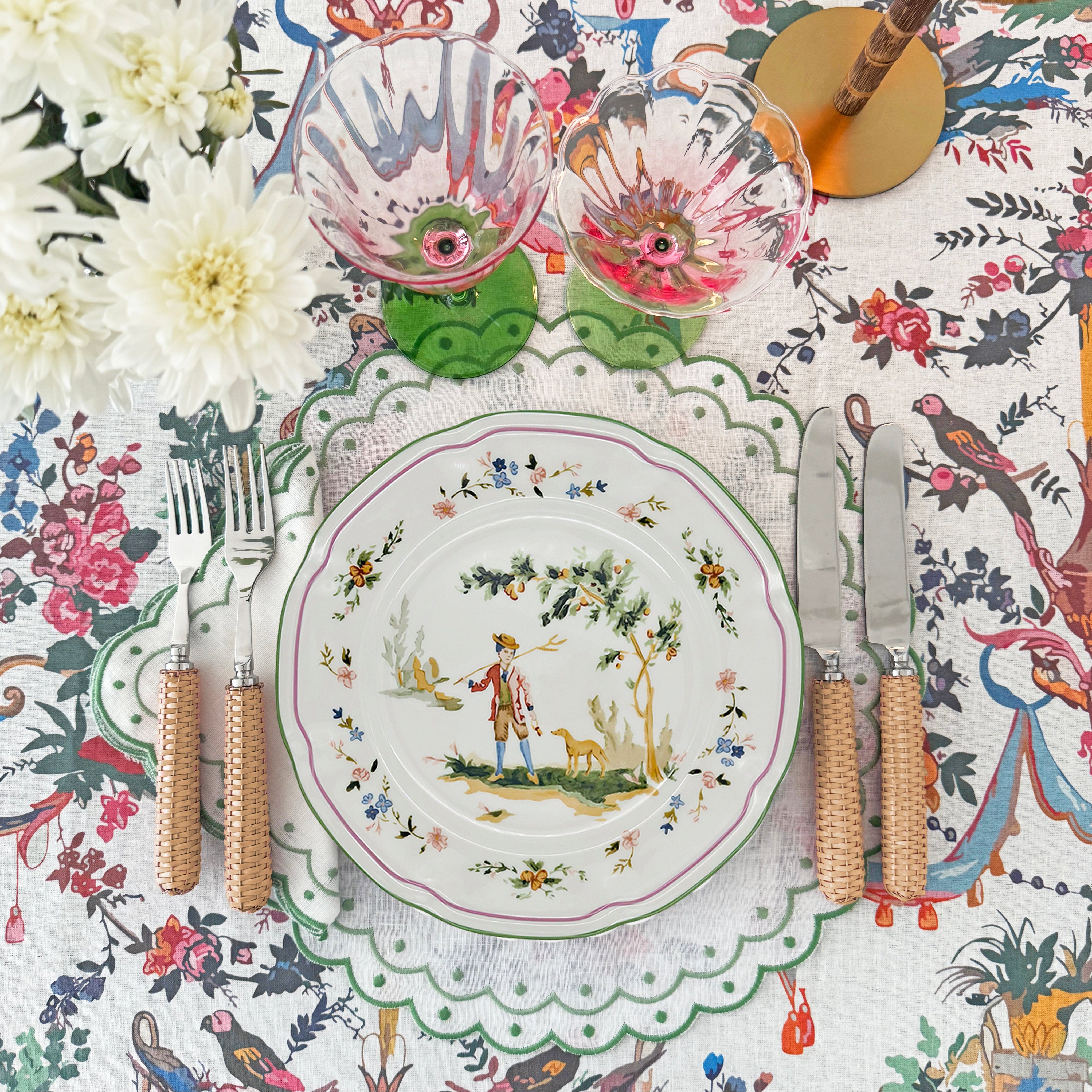

A bare table can feel perfectly pleasant, but embroidered placemats give it a point of view. A scalloped edge, a row of stitching, or a small floral motif brings intention to the place where friends settle in, stories lengthen, and an ordinary Tuesday becomes worth setting properly.
They do more than protect the table. Embroidery introduces dimension, color, and a sense of care that printed linens rarely achieve. Whether the mood is garden lunch, candlelit supper, or a cheerful family gathering, these pieces offer an easy starting point for a table that feels personal rather than overly planned.
Why Embroidered Placemats Feel So Special
Embroidery has a quiet visual richness. The thread catches the light differently than the ground fabric, creating contrast you notice up close and a pleasing outline you notice from across the room. It is detail with presence, not noise.
That distinction matters when building a table. A patterned tablecloth can carry a great deal of visual energy, while embroidered placemats often frame each setting with a more considered hand. They can define a place setting without making the table feel crowded, especially when paired with simple napkins, clear glassware, or hand-painted pieces that deserve their own moment.
There is also a sense of occasion in the work itself. Embroidery calls to mind heirloom linens and thoughtful gifts, yet it need not be reserved for formal celebrations. A well-chosen set makes everyday gathering feel more gracious. This is the charm of a beautiful table: it asks very little of anyone, while making everyone feel expected.
Choosing Embroidered Placemats for Your Table
Start with the setting you use most often, not the one you imagine once a year. If your table is richly grained, a light linen or cotton ground with a colored border will provide contrast and let the wood remain part of the story. On a painted or pale table, deeper thread colors, natural fibers, and bolder motifs add welcome definition.
Shape changes the mood as much as color. A rectangular placemat feels tailored and classic, particularly under a formal place setting. Round placemats soften the scene and suit a table with generous curves, while scalloped silhouettes bring an unmistakably feminine note. None is inherently more versatile. The right choice depends on your table shape, your everyday dishes, and the amount of space each guest needs.
Color deserves a practical approach. A placemat does not have to match every piece on the table. In fact, a little contrast is often what makes a setting memorable. Consider drawing one color from a patterned plate, a floral arrangement, or the room beyond the table. Blue embroidery can make white china feel crisp and fresh; green feels especially at home with natural woven textures; red, coral, or pink brings warmth to celebratory tables.
For a first set, choose a color that works through more than one season. Soft blue, leafy green, warm terracotta, and classic navy have range without disappearing into the background. If you already have a dependable neutral foundation, a brighter embroidered style is a lovely way to add personality without replacing everything else.
Think About Scale Before You Set Eight Places
An ornate border looks best when it has breathing room. Before choosing a placemat, consider the diameter of your plates, the size of your glasses, and whether you like to place serving pieces directly on the table. A generous border can be beautiful beneath a smaller dinner plate, but may be lost under oversized pieces.
Likewise, detailed embroidery can compete with a heavily patterned tablecloth. If the cloth has a strong print, choose placemats with a simpler stitched edge or use them directly on the table. When the placemat is the main decorative layer, a plain cloth napkin or subtle stripe maintains balance.
Styling Embroidered Placemats With Ease
The most inviting tables have a little structure and a little looseness. Begin with the placemat, then place your everyday dishes on top. Add a napkin in a neighboring shade rather than an exact match. A soft blue mat with a pale green or butter-yellow napkin feels collected over time, which is far more interesting than a perfectly coordinated set.
For a polished lunch table, pair embroidered placemats with white or cream plates, colored water glasses, and a small arrangement of flowers placed low enough for conversation. The embroidery supplies the decorative finish, so there is no need to add many more layers. A single candleholder or a small lamp can bring warmth as the afternoon fades.
For evening, let texture do more of the work. A linen placemat with tonal embroidery, polished flatware, and a softly patterned napkin creates an elegant setting without becoming precious. If you are using hand-painted plates, look for an embroidered border that echoes one color in the design rather than trying to reproduce the full pattern.
Seasonal shifts can be wonderfully subtle. In spring and summer, use crisp whites, grass green, hydrangea blue, or lively coral. In autumn, bring in rust, olive, plum, and warmer natural fibers. During the holidays, embroidered placemats with a delicate metallic thread or deep jewel-toned detail can feel festive while still allowing your table to remain unmistakably yours.
The Art of Mixing, Not Matching
Matching sets have their place, especially for a formal gathering, but a table comes alive when the components share a conversation instead of a uniform. Mix an embroidered placemat with a striped napkin, a woven charger, or a patterned plate, then repeat one color twice so the setting feels intentional.
The trade-off is visual density. If the placemat, plate, napkin, and glass all feature a strong pattern, each beautiful element begins to compete. Let one item lead and allow the others to support it. Embroidered placemats are often ideal leaders because they establish color at every seat while keeping the center of the table open and inviting.
A collection also gives you more freedom than one complete look. A dozen placemats in two complementary colors can be used in a symmetrical arrangement for a larger gathering or mixed around the table for a relaxed family occasion. The result feels welcoming, not rigid.
Care That Preserves the Detail
Fine embroidery benefits from gentle attention, but it is meant to be enjoyed. Shake out crumbs promptly and address small spills before they have time to settle. Blot rather than rub, especially around stitched areas, so the threads keep their shape and color.
Always follow the care label for the specific fabric and thread. Many embroidered linens respond well to careful hand washing or a delicate machine cycle in cool water, while others are best professionally cleaned. Avoid harsh bleaching agents, which can weaken fibers and alter the color of embroidery. If pressing is appropriate, work from the reverse side with a pressing cloth so the stitched design retains its dimension.
Store placemats flat when possible, or fold them loosely along existing lines rather than pressing sharp creases through an embroidered border. Rotating between sets is a practical way to extend their life and gives your table a fresh look with very little effort.
A Beautiful Place to Begin
The best entertaining pieces invite use, not hesitation. At Duggan Society, the table is treated as a daily expression of welcome: a place for thoughtful layers, easy conversation, and objects chosen because they make the moment feel more considered.
Choose embroidered placemats that make you want to set the table before anyone arrives. Let them carry a favorite color, soften a familiar setting, or mark the beginning of a new tradition. A beautifully prepared place tells each guest something simple and lasting: there is room for you here.