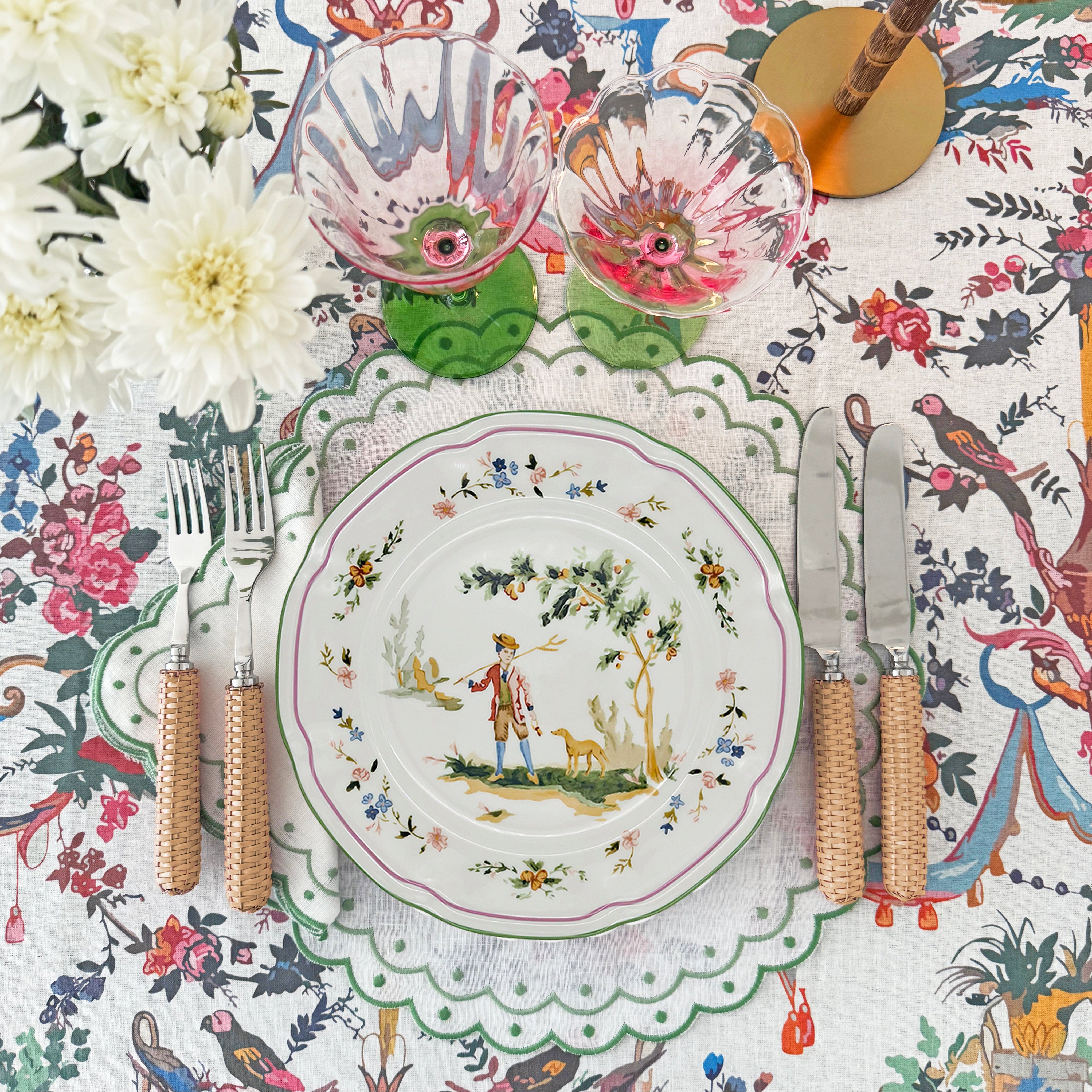

A table set with one perfectly matched pattern can be beautiful. A table set with a hand-painted plate from one collection, inherited crystal from another, and a quietly modern linen beneath it feels like a life well lived. Learning how to mix vintage tableware is less about following strict rules than creating a sense of welcome - one that lets every guest feel the care behind the occasion.
The most memorable tables have a point of view. They carry a little history, a little surprise, and enough intention that the mix feels collected rather than crowded. The aim is not to make every place setting identical. It is to give the entire table a shared rhythm.
Start With One Unifying Element
The easiest way to make varied pieces feel composed is to choose one visual thread before bringing anything else to the table. That thread might be color, material, shape, or mood. A set of softly scalloped plates, for example, can bring together antique floral salad plates, clear stemware, and woven placemats without asking every element to match.
Color is often the most forgiving place to begin. If your vintage pieces include faded blue flowers, let blue appear again in a napkin edge, a candle, or the hand-painted detail of a serving bowl. The shades do not need to be exact. In fact, a pale cornflower beside a deeper French blue feels more natural than a perfect match.
Alternatively, use a neutral foundation. White, ivory, tobacco, natural raffia, and clear glass give more decorative vintage pieces room to breathe. This is especially useful when you have inherited china in a detailed pattern but would prefer the table to feel fresh rather than formal.
How to Mix Vintage Tableware Without Looking Busy
The difference between charmingly layered and visually overwhelming usually comes down to scale. When several patterns appear at the same place setting, vary their size. Pair a larger botanical or toile border with a smaller check, stripe, or tiny floral. Two bold, similarly sized prints often compete for attention.
Think of the table in levels. The charger or placemat is the frame. The dinner plate establishes the main statement. The salad or dessert plate offers a moment of personality. Once those layers are in place, glassware, linens, and small decorative accents should support the story rather than begin a new one.
A useful guideline is to let one piece be the heroine. If you are using richly patterned antique plates, choose quieter linens and simple glassware. If the tablecloth has a strong stripe or block print, bring in vintage plates with a restrained border or a single painted motif. Restraint does not mean the setting has to be plain. It means each lovely detail has a chance to be seen.
Texture can unite pieces just as effectively as pattern. A woven placemat, linen napkin, etched tumbler, and glazed ceramic plate may come from different eras, but their tactile quality makes them feel at home together. This approach is particularly elegant for daytime gatherings, when natural light can do much of the decorating for you.
Let Place Settings Vary, but Repeat the Gesture
A mixed table should not feel as though every guest has been given entirely unrelated pieces. Rather than repeating the exact plate at every seat, repeat a gesture. Perhaps each place setting includes a floral salad plate, but the flowers change from seat to seat. Perhaps every guest receives a colored goblet, while the colors alternate around the table.
This kind of variation feels generous and considered. It also gives guests a small point of discovery when they sit down. A collection becomes more beautiful when it is used, not kept behind a cabinet door waiting for an occasion grand enough to justify it.
If you have only a few vintage pieces, reserve them for the upper layer of the place setting. A set of four antique dessert plates can be placed over everyday dinner plates for a lunch of eight, creating a focal point without requiring a full service. A single vintage compote or footed bowl can become the center of the table, filled with fruit, flowers, or a cluster of small candles.
Use Modern Pieces to Give the Table Air
Vintage tableware becomes especially easy to live with when it is balanced by contemporary essentials. A clean-lined linen napkin, rechargeable table lamp, or simple clear tumbler can make ornate china feel lighter and more relaxed. The contrast keeps the setting from becoming overly themed or overly precious.
This is also where function matters. Use pieces that suit the gathering in front of you, not only the image in your mind. Tall antique stems may be lovely for an unhurried supper, but low glasses can be more comfortable when the table is full of conversation and flowers. Delicate cups may suit a seated gathering, while sturdy patterned tumblers invite guests to move easily from the table to the terrace.
There is no need to force every vintage item into service at once. A graceful table often has a few contemporary anchors: matching flatware, one style of napkin, or a consistent lamp at each end. These repetitions make the collected elements feel deliberate.
Build the Table From the Outside In
When arranging a mixed setting, begin with the broadest visual decisions and work inward. Set the tablecloth or placemats first, then place chargers or dinner plates, followed by smaller plates and linens. Add glassware next, then finish with candles, flowers, and serving pieces.
Working in this order makes it easier to see where the table needs quiet. If the plates already carry plenty of color, choose a simple centerpiece. If the linens are understated, a more expressive bowl or pair of candlesticks can bring life to the center. Keep floral arrangements low enough that guests can see one another comfortably. The most polished tables always leave room for conversation.
Do not be afraid of a little asymmetry at the center of the table. A grouping of two lamps, a low bowl, and a few small vessels can feel more relaxed than one large arrangement placed squarely in the middle. The place settings should remain balanced, but the center can have the ease of something gathered over time.
Make Peace With Imperfection
Part of the appeal of vintage pieces is that they have already lived a little. A softened gilt edge, a faintly crazed glaze, or a plate that differs slightly from its companion is not a flaw to disguise. It is the detail that gives the table warmth.
That said, be discerning. Reserve visibly chipped or cracked pieces for display rather than serving, and consider the practical needs of the occasion. Heirloom crystal may deserve hand washing after a special evening, while more durable pieces can carry the everyday rhythm of lunches, birthdays, and Sunday suppers. A beautiful collection is one you can enjoy without anxiety.
When in doubt, edit one element rather than adding another. Remove a patterned napkin, trade colored glassware for clear, or choose one sculptural serving bowl instead of several. The right mix should feel effortless, even when every detail has been thoughtfully chosen.
Set out the pieces that make you pause for a moment of pleasure. A vintage table is not a museum display. It is an invitation to linger, tell stories, and make new memories around objects that already have a history.