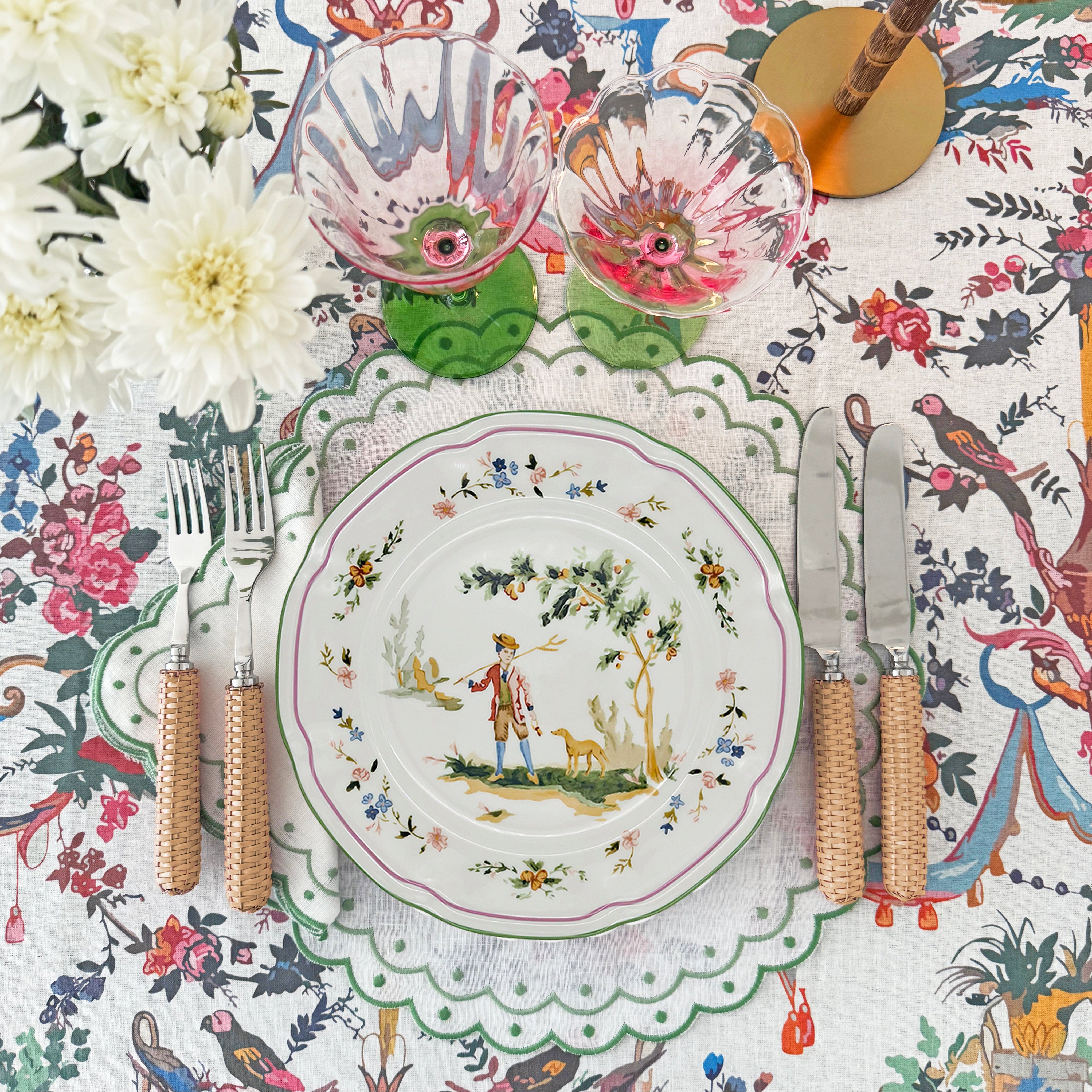

The table is cleared, the light is low, and a few thoughtful details change the feeling of the room entirely. This is where luxury homeware earns its place: not tucked away for an occasion that may never arrive, but brought out for a weekday lunch, a neighbor stopping by, or a long-awaited family gathering.
True luxury is not about making a home feel precious or overly formal. It is about choosing objects with presence - pieces that feel wonderful to use, look considered from every angle, and invite people to linger a little longer. A hand-painted plate, a linen napkin with a soft drape, or the warm glow of a cordless lamp can turn a simple setting into a generous gesture.
Luxury Homeware Is Made for Living
The most lasting home pieces do more than photograph beautifully. They become part of the rhythm of the household. They are the tray carried out for afternoon drinks, the candle lit before guests arrive, and the placemats that make even a casual meal feel intentional.
That is the distinction between decoration and a well-collected home. Decorative objects may be lovely, but the pieces that stay with you are the ones that participate in life. They withstand regular use, feel pleasing in the hand, and retain their character after the first celebration has passed.
For entertaining, this means looking beyond the idea of a perfectly matched set. A table with personality often comes together through contrast: crisp linens beside painted ceramics, woven texture alongside polished glassware, a tailored tablecloth softened by a playful candleholder. The goal is cohesion, not uniformity. A room should feel assembled over time, even when every detail has been selected with care.
The Quiet Value of Materials and Finish
Materials matter because they shape both atmosphere and experience. Natural fibers bring ease and texture to the table. Hand-finished ceramics introduce variation that makes each place setting feel personal. Glassware catches candlelight differently than porcelain, while woven details lend an outdoor, resort-like note even when the gathering is indoors.
Finish matters just as much. A scalloped edge, a painted border, or a lacquered surface can provide enough visual interest to make a setting feel complete without filling it with excess. These details are small, but they communicate attention. They tell guests that the moment was anticipated.
There is a practical side to this, too. Pieces intended for frequent use should suit the way you actually gather. If your table regularly welcomes children, choose items that are gracious without demanding worry. If you love longer, candlelit evenings, consider lighting that gives warmth without cords crossing the table. The right choice depends on your rituals, not a rigid idea of what luxury should look like.
How to Build a Collection That Layers Beautifully
A thoughtful collection starts with a few reliable anchors. Rather than purchasing everything at once, begin with pieces that can move easily between seasons, guest lists, and moods. A beautiful foundation gives you room to change the story later.
Start with linens in colors that feel at home in your spaces. A neutral cloth can make patterned plates sing, while a richly colored runner can ground clear glassware and simple ceramics. Then choose tabletop pieces with an element worth repeating, whether it is a particular shade of blue, a botanical motif, a painted rim, or a warm natural weave.
Repeating one note gives a table its sense of order. It might be as subtle as carrying the green in a floral plate into the shade of a candle, or as direct as echoing a stripe from a napkin in a lampshade. This creates a composed look without making every item identical.
Resist the impulse to match every plate, glass, and accessory exactly. Matching can feel polished, but it can also become stiff. Mixing a beloved pattern with solid-colored companions allows special pieces to stand out. It also makes a collection more flexible: a formal supper can be softened for brunch, and a familiar tabletop can take on new life with one seasonal addition.
Choose the Pieces Guests Notice and Remember
Some objects naturally carry more of the scene than others. Lighting sets the mood before anyone takes a seat. A pair of rechargeable lamps can make a long table feel intimate, while a candle placed on a tray creates a small, welcoming focal point near a bar cart or entry table.
Linens are equally transformative. They frame the table, create softness, and make the setting feel finished before a single place setting is added. A generous tablecloth signals occasion, while placemats offer an easy way to add color and structure for an everyday gathering.
Then there are the details guests pick up and ask about: a painted bowl, an unusual cocktail napkin, a charming match striker, a woven bag waiting near the door, or a handsome game set placed in the sitting room. These are the pieces that make a home feel distinctly inhabited. They are also the most delightful to give, because they offer both beauty and a future moment to enjoy.
A More Relaxed Approach to Elegant Entertaining
A beautiful home should never make its owner nervous. The best entertaining pieces allow you to set a lovely scene, then sit down and enjoy it. This is why usability is a form of luxury. You should be able to reach for your favorite glasses without calculating whether the moment is worthy enough. You should feel comfortable combining treasured pieces with everyday essentials.
A well-set table does not require elaborate rules. Begin with one element you love, then build around it. Perhaps it is a patterned tablecloth that calls for clear glassware and simple candles. Perhaps it is hand-painted dinnerware that looks especially fresh with crisp white linens. Let the strongest piece lead, and keep the rest of the setting edited.
Scale is worth considering. A crowded table can make conversation difficult, no matter how beautiful the objects are. If the centerpiece is generous, keep place settings more restrained. If your dinnerware has an expressive pattern, choose quieter linens. Leaving room for glasses, serving pieces, and easy movement is part of making guests comfortable.
Color also benefits from restraint. Two or three colors, plus a neutral, often create more impact than a full spectrum. This does not mean every gathering must be subdued. A confident red, sunny yellow, or Palm Beach-inspired green can be wonderfully festive. The trick is to give the eye a place to rest.
Luxury Homeware That Becomes Part of the Tradition
The most meaningful home objects gather associations over time. The glasses become the ones used for birthday toasts. The tablecloth recalls a holiday lunch that ran into late afternoon. The mahjong set becomes a standing invitation for friends to stay awhile. Beauty deepens when it is connected to memory.
This is also why a considered homeware gift can feel so personal. A gift does not need to be overly grand to be memorable. It simply needs to suit the recipient's life: a tray for someone who loves a beautifully arranged side table, a candle for a friend settling into a new home, or a distinctive set of napkins for the woman who always makes everyone feel welcome.
At Duggan Society, the pleasure lies in pieces designed for the moments that bring us together. They are expressive enough to feel special, yet easy enough to become part of the everyday. That balance is what allows a collection to grow naturally rather than sit untouched behind closed doors.
When choosing for your home, select the pieces that make you want to set the table before there is a reason to do so. Light the lamp, unfold the linen, and pour something lovely. Often, the occasion begins the moment you decide to make ordinary time feel well shared.