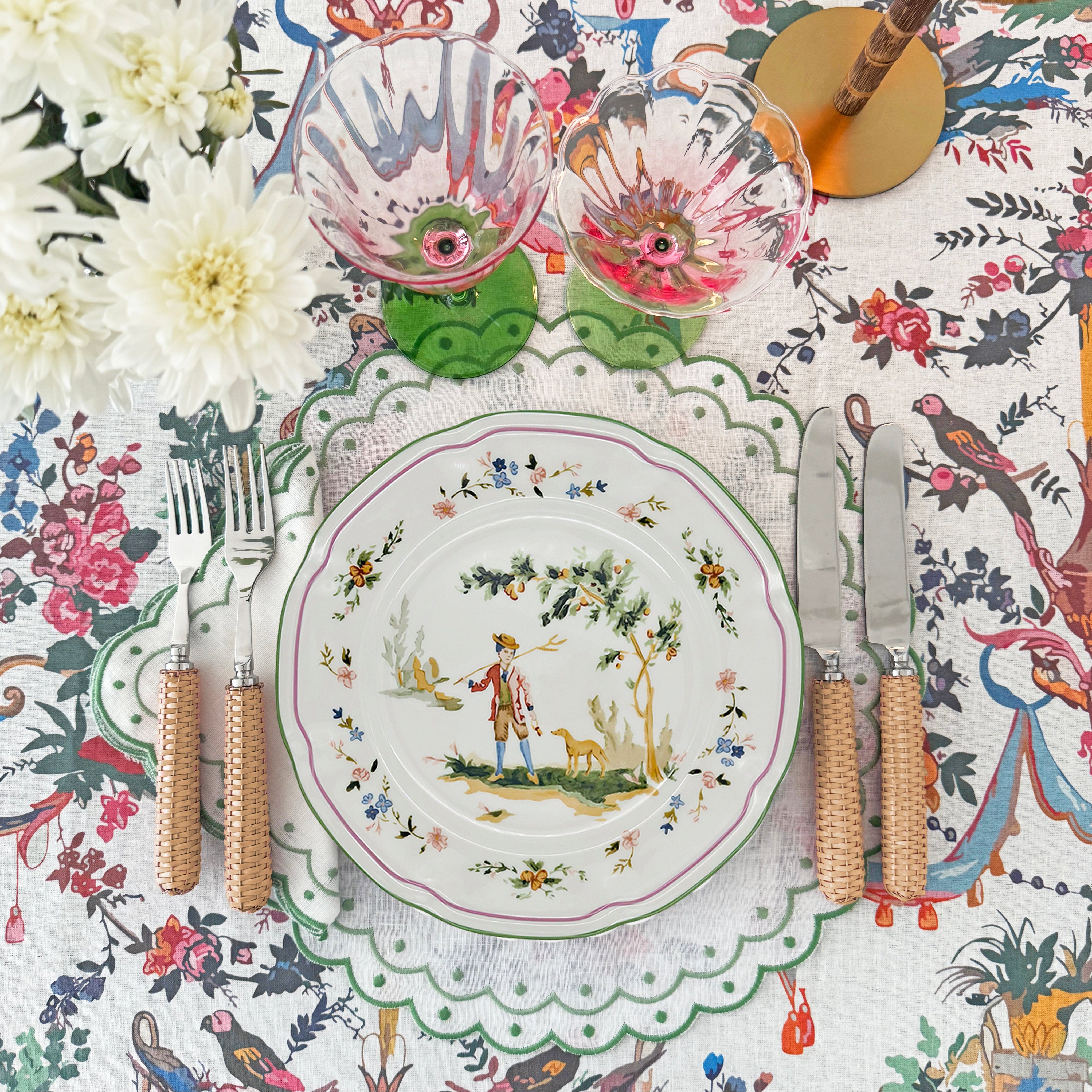

A beautiful table begins before the flowers are arranged or the candles are lit. In the conversation around charger plates vs placemats, the right choice comes down to the feeling you want guests to have when they take their seat: relaxed and sunlit, richly layered and celebratory, or somewhere gracefully in between.
Both pieces bring purpose and personality to the table, but they do different work. A charger establishes the place setting from the center outward. A placemat frames it from beneath, adding texture, color, and a sense of occasion while helping protect the surface below. Once you understand their roles, setting a table becomes less about rules and more about creating an atmosphere that feels considered, welcoming, and entirely your own.
What Is the Difference Between Charger Plates and Placemats?
A charger plate is a large, decorative plate placed beneath the dinner plate. It remains on the table throughout the main course, creating a layered silhouette and giving each place setting a more formal, composed appearance. Chargers are not typically used for serving food directly. Think of them as the foundation for the plate you will serve on.
A placemat sits directly on the table and defines each guest's space. It can be woven, lacquered, embroidered, linen, or made from an easy-to-wipe material, depending on the setting. While a placemat certainly protects a table from everyday wear, its greater contribution is visual: it introduces shape, texture, and a border of color around the plate.
The distinction is simple. Chargers elevate the plate itself, while placemats ground the entire setting. One is not a substitute for the other, though either can stand beautifully alone.
When a Charger Plate Is the Right Choice
Choose charger plates when the meal calls for a little ceremony. They are especially lovely for seated celebrations, holiday tables, birthday suppers, and evenings when the menu is served in courses. A charger gives the table an immediate sense of generosity, even before the first glass is poured.
This does not mean chargers are reserved for highly formal occasions. A hand-painted charger beneath crisp white dinnerware can feel fresh at a Sunday lunch. A woven or rattan-inspired style can bring a relaxed Palm Beach sensibility to an outdoor table. The material and pattern determine the mood as much as the charger itself.
Chargers are also particularly effective when your dinnerware is understated. A simple plate gains presence when surrounded by a scalloped edge, a saturated hue, or a quietly detailed border. If you collect mix-and-match tableware, chargers offer an easy way to refresh familiar pieces without changing the entire table.
There are practical considerations, too. Because chargers take up visual and physical space, they work best when each guest has room to enjoy the setting comfortably. On a smaller table or at a lively gathering where platters, flowers, and shared bottles will be passed freely, an oversized charger may make the table feel crowded rather than abundant.
A note on proportion
A charger should extend beyond the dinner plate by roughly one to two inches on all sides. It should feel like a deliberate frame, not an afterthought. If the charger is too large for the table or too close to neighboring settings, the effect can become cramped. Leave enough breathing room between place settings for folded napkins, glassware, and easy conversation.
When Placemats Make More Sense
Placemats are the natural choice for everyday meals and more relaxed gatherings. They offer an effortless way to make breakfast, lunch, or an impromptu evening meal feel cared for. A table set with placemats says that the moment matters, even when the menu is simple and the guest list is small.
They are also wonderfully adaptable. Round placemats soften a rectangular table and echo the curve of a plate. Rectangular placemats feel tailored and classic, especially beneath layered linens. Scalloped edges bring a feminine note, while woven textures add warmth to polished wood, painted finishes, and outdoor settings.
For a table with a memorable surface, placemats let the material remain part of the story. A richly grained wood table, a painted garden table, or a beautiful cloth can still be seen around the edges. This makes placemats especially useful when you want texture without covering the entire table.
Consider care as well as style. Wipeable placemats are a thoughtful choice for frequent use and gatherings with a more relaxed rhythm. Linen or embroidered options feel especially inviting when you have time to press, layer, and savor the ritual of setting the table. Neither is more correct. The best choice is the one that supports how you actually gather.
Charger Plates vs Placemats: When to Layer Both
Layering chargers over placemats is one of the easiest ways to create a table with depth. The result can feel wonderfully festive, but it depends on restraint. When both pieces are strong in color, pattern, or texture, the setting can become visually busy before the glassware, flowers, and napkins are even added.
A useful approach is to let one element lead. Pair a detailed charger with a quieter placemat, perhaps in a coordinating solid or natural weave. Or use a statement placemat as the focal point and choose a simple charger in white, clear acrylic, or a finish that echoes the flatware. This balance gives the eye a place to rest.
Layering is particularly lovely for a holiday table, a milestone gathering, or an evening where the table itself is part of the occasion. It creates a sense of arrival. The guest sits down and immediately feels that the evening was prepared with them in mind.
For more casual occasions, you might use both in a lighter way: a woven placemat, an uncomplicated ceramic charger, white dinnerware, and a linen napkin tied with a ribbon or small sprig of greenery. The pieces still feel special, but the table retains ease.
Keep the center of the table in balance
The fuller each place setting becomes, the more edited the center of the table should be. Low candlelight, a few small arrangements, or a single sculptural bowl often has more impact than an elaborate display competing with every charger and placemat. Guests should be able to see one another without peering around the décor.
Choosing Materials That Suit the Occasion
Material can guide your decision as clearly as color. Ceramic and hand-painted chargers bring artistry and richness to a traditional table. Glass or acrylic styles feel light and polished, particularly when you want the plate beneath to remain visible. Metal-toned chargers add a touch of evening glamour, though they are often best balanced with simpler linens and glassware.
For placemats, woven fibers offer an inviting, lived-in texture that feels at home from a terrace lunch to a candlelit supper. Linen lends softness and quiet refinement. Lacquered or coated surfaces bring a crisp, tailored look and are especially practical for tables used often.
You do not need every piece to match perfectly. In fact, a table feels more collected when materials have a conversation with one another. A woven placemat beneath hand-painted dinnerware, polished glassware, and a small cordless lamp can feel personal rather than overly prescribed. The common thread might be a color, a shape, or simply the warmth of the materials.
A Few Table-Setting Details That Change Everything
If you use a charger, place it at the center of each setting before adding the dinner plate. The napkin may sit on top of the plate, to the left beneath the forks, or in a relaxed fold beside the setting. When using placemats alone, center the dinner plate on the mat and allow the placemat's shape to show around it evenly.
For a meal with several courses, the charger generally stays in place until the main course is cleared. It should be removed before dessert is served. Placemats, on the other hand, remain throughout the meal unless the table is being reset for a distinctly different dessert moment.
Above all, let the table serve the gathering. A grand charger may be exactly right for an anniversary supper, while a cheerful placemat is perfect for a long lunch that drifts into afternoon. The most gracious table is not the most formal one. It is the one that makes everyone feel expected, comfortable, and glad to linger.
The next time you set the table, begin with one beautiful decision: choose the foundation that makes the occasion feel a little more like yours.