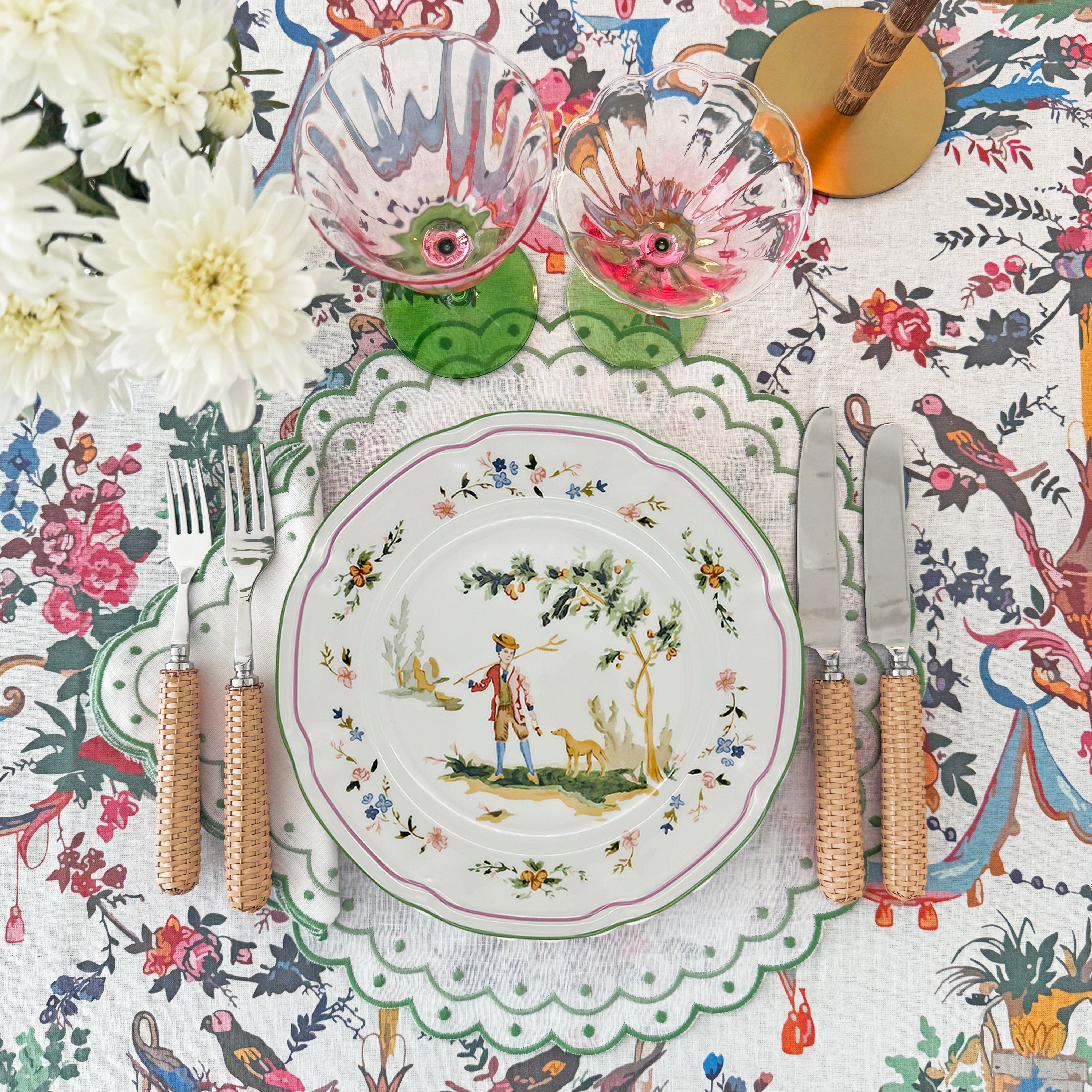

A beautiful table rarely comes together because of one heroic centerpiece. It works because each layer supports the next - the cloth, the place setting, the glassware, the light, the small details that make the whole scene feel considered rather than crowded. If you have ever wondered how to layer a tablescape so it feels polished but not overdone, the answer is less about rules and more about rhythm.
The most inviting tables have a point of view. They do not look like every piece was chosen at once, and they do not feel so precious that guests are afraid to sit down. They feel collected, comfortable, and ready for a long lunch, a candlelit supper, or a celebratory gathering that lingers well past dessert.
Start with the foundation
Every well-layered table begins at the base. Before you think about plates or flowers, decide what will ground the setting visually. That might be a full tablecloth for softness and formality, or placemats on a bare table for a cleaner, more tailored effect.
A tablecloth creates immediate atmosphere. It softens hard edges, adds color or pattern, and makes even a simple setting feel intentional. Placemats, on the other hand, define each seat and let the table itself remain part of the composition. Neither choice is inherently better. It depends on the mood you want. A cloth feels romantic and enveloping. Placemats feel crisp and architectural.
If you are using both, keep proportion in mind. A patterned cloth with heavily textured placemats can be charming, but only if one element clearly takes the lead. When everything competes, the eye has nowhere to rest.
Choose one visual anchor
Before adding the next layer, decide what the table is really about. Sometimes it is the linen. Sometimes it is a hand-painted plate. Sometimes it is a floral arrangement or a pair of cordless lamps casting the most flattering glow in the room. Once you know the star, the rest of the table becomes easier to edit.
This is where many tables go astray. Hosts often keep adding beautiful things without choosing a focal point, and the result feels busy instead of elegant. Restraint is what makes luxury feel effortless.
How to layer a tablescape from the plate up
The place setting is where layering becomes most visible. Begin with your charger or dinner plate, then add a salad plate or dessert plate if the occasion calls for it. The stack should feel balanced, not towering. Two or three pieces are usually enough for a refined setting.
Texture matters as much as color here. A woven charger under a glossy ceramic plate creates depth. A scalloped edge or painted border adds movement without asking for more decoration. If your dinnerware already has strong pattern, let the rest of the place setting quiet down a bit. Clear glassware, simple flatware, and a restrained napkin will keep the table from feeling too formal or too full.
If your plates are classic and understated, you have more freedom to introduce detail elsewhere. A printed napkin, colored goblet, or decorative place card can carry more personality because the base is calm.
Let contrast do the work
A layered table needs contrast to feel dimensional. That can mean matte against shine, woven against polished, tailored against organic. Without contrast, even lovely pieces can blur together.
Contrast does not need to be dramatic. A crisp linen napkin on a woven placemat is enough. So is a delicate floral plate paired with sculptural glassware. The goal is interest, not novelty.
Napkins, flatware, and the art of placement
Napkins are one of the easiest ways to change the tone of a table. Folded neatly beneath the salad plate, they feel traditional and composed. Draped loosely through a ring or tied with ribbon, they feel softer and more relaxed. There is no single correct style, only the one that suits the gathering.
Flatware should support the table rather than shout over it. If the dinnerware is detailed, keep flatware sleek. If the place setting is simple, a bamboo handle or brushed finish can add just enough character. Placement matters, of course, but so does spacing. Crowded settings can feel fussy. Give each piece a little breathing room.
This is also where practicality deserves a place in the conversation. A very ornate napkin fold may look beautiful before guests arrive, but if it topples the moment someone sits down, it is not serving the evening. The most successful tables are lovely and livable.
Build the center with height and light
The center of the table should create atmosphere without blocking conversation. That sounds obvious, yet oversized arrangements and tall vessels are a common mistake. A tablescape is not a lobby installation. Guests should be able to see one another comfortably across the table.
Think in low layers instead. A floral arrangement with a natural shape, a row of small vessels, or a cluster of candles can create presence without visual obstruction. Rechargeable lamps are especially useful because they add warmth and a sense of occasion while remaining practical. The light is flattering, the mood shifts instantly, and the table feels finished.
Vary height carefully
A table needs some vertical movement, but not too much. The easiest way to achieve this is to mix a few low elements with one or two slightly taller accents. Imagine a row of bud vases, small candles, and one central bowl. The eye travels, but the table still feels open.
If your gathering is lunch outdoors, the center may need even more restraint. Wind, sunlight, and a brighter setting naturally ask for a lighter touch. Indoors at night, you can lean further into glow and richness.
Color should feel collected, not matched
One of the most elegant answers to how to layer a tablescape is to stop trying to make every piece match exactly. A compelling table usually lives within a palette rather than a perfect set. Blues with greens, cream with tobacco, pink with red, wicker with white - these combinations feel more personal because they have nuance.
A simple approach is to choose three colors. Let one lead, one support, and one appear in small accents. This keeps the table coherent while still allowing room for personality. Too many dominant colors can make the setting feel scattered, especially if pattern is also in play.
Pattern works the same way. Mixing patterns is often more interesting than using just one, but scale is what keeps it chic. Pair a larger print with a smaller one, or a stripe with a floral, and give each pattern some solid space around it. When every surface is patterned at the same intensity, the effect can feel restless.
Add the details that make it feel personal
The final layer is where the table begins to feel truly yours. Place cards, menu cards, a small decorative object near each setting, or a thoughtful favor can all add charm. These are not mandatory. In fact, they are best used selectively. A table does not need embellishment at every turn.
What matters most is that the details feel connected to the occasion. A birthday dinner might call for a more playful touch. A holiday table may invite richer color and tradition. A Sunday lunch can be simpler, with beautiful linens, good light, and flowers doing most of the work.
Duggan Society understands this balance well - the idea that entertaining can be elevated without becoming stiff, and that the pieces you love should be used often, not kept waiting for a grand occasion.
How to layer a tablescape for different moods
A casual table still benefits from layering. In fact, it often looks more sophisticated when there is just enough structure beneath the ease. Start with placemats, add a dinner plate and napkin, then bring in glassware and a simple centerpiece. The result feels relaxed but considered.
For a more formal setting, you can add another plate layer, fuller linens, candlelight, and perhaps a more detailed arrangement. The trade-off is that formality asks for more editing. The richer the table becomes, the more careful you need to be about balance.
Season also plays a role. Spring and summer can carry lighter color, natural texture, and airy spacing. Fall and winter often welcome deeper tones, richer materials, and more glow. Still, season should guide the table, not trap it. A crisp white setting can look beautiful in any month if the layers around it shift thoughtfully.
A lovely table is never just about what is on it. It is about how it makes people feel when they take their seats. Layer with intention, leave room for ease, and let beauty serve the gathering rather than compete with it.