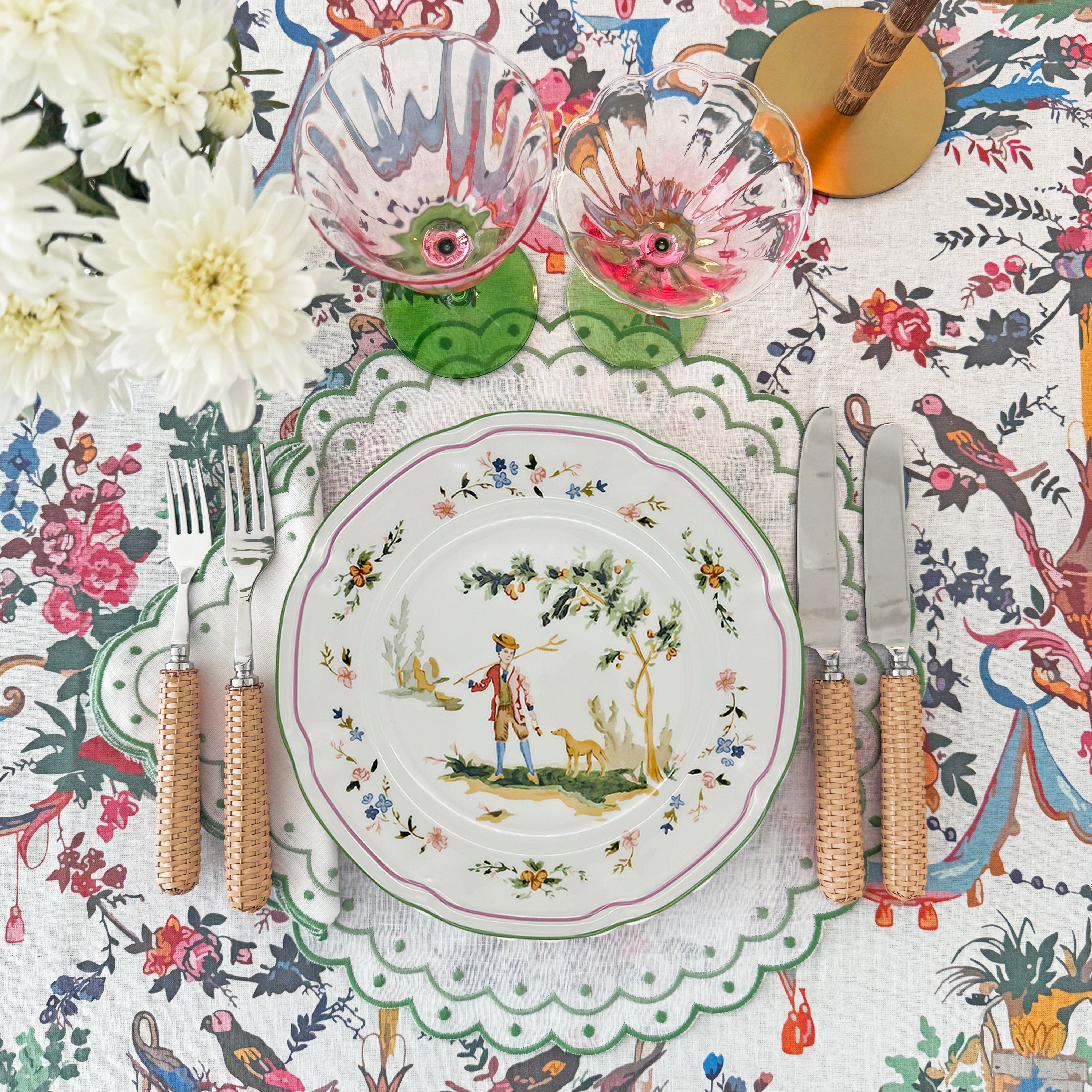

A home rarely feels luxurious because everything matches perfectly. More often, it feels luxurious because the room knows how to receive people. The lamp glows softly at four in the afternoon. The tray on the coffee table holds exactly what it should. The table is set with intention, even on an ordinary Tuesday. That is the quiet appeal of everyday luxury home decor - pieces that elevate the atmosphere without asking you to live too carefully around them.
For women who love a beautiful home, the goal is not to create a space that feels formal for the sake of formality. It is to create one that feels considered. A well-dressed table, a crisp linen, a sculptural candle, or a cordless lamp placed just so can shift the mood of an entire room. Luxury, in this sense, is less about rarity and more about rhythm. It lives in the habits that make home feel gracious.
What everyday luxury home decor really means
Everyday luxury home decor sits in a very particular sweet spot. It is refined, but not precious. Distinctive, but still easy to live with. It offers beauty you can actually use, which is what makes it feel relevant beyond a holiday or special event.
That distinction matters. A decorative object can be lovely and still not contribute much to daily life. By contrast, the most enduring luxury pieces tend to do two things at once: they add visual presence and they support a ritual. A hand-painted plate makes lunch feel more inviting. A woven tray gives order to a guest room. Rechargeable lighting adds intimacy to a side table or dining setup without the clutter of cords. These are not grand gestures. They are small refinements with lasting effect.
There is also a practical intelligence behind this kind of decorating. The best homes are not styled from scratch every time guests arrive. They are already prepared for company because the objects in them are chosen with both daily living and gathering in mind.
The difference between staged luxury and usable luxury
There is a version of luxury decor that photographs beautifully and lives rather stiffly. Rooms like that can feel impressive, but they often discourage ease. You notice what cannot be touched before you notice what invites you to sit down.
Usable luxury is more nuanced. It still values craftsmanship, color, and finish, but it leaves room for life. Glassware should feel as natural at a family lunch as it does at a candlelit dinner. Linens should drape beautifully, but they should also be brought out often enough that they become part of the household language. Decorative accessories should contribute charm and order, not just fill a surface.
This is where taste shows. Anyone can buy one dramatic statement piece. A more sophisticated home is built through layers that work on an ordinary day. It depends less on spectacle and more on consistency.
How to choose everyday luxury home decor with staying power
The most elegant homes tend to rely on a few principles rather than a single look. One is versatility. Pieces that move easily from breakfast table to evening entertaining earn their place quickly. Another is materiality. Texture carries enormous weight in a room, especially when the palette is restrained. Linen, woven details, lacquered surfaces, glass, and ceramic finishes bring richness without visual noise.
Color deserves a thoughtful hand as well. Soft neutrals will always have appeal, but everyday luxury does not require playing it safe. A polished blue-and-white scheme, a warm leafy green, or a touch of coral can feel timeless when used with discipline. The trick is choosing colors that flatter the mood of the home rather than dominate it. Palm Beach brightness, country house softness, and tailored classicism can all feel luxurious when balanced properly.
Scale matters more than many people realize. A small lamp can disappear on a generous console, while a large tray can instantly make a coffee table feel grounded and purposeful. The same principle applies to tabletop pieces. Layering placemats, dinnerware, glassware, and linens creates depth, but only if each element has enough presence to hold its own.
The rooms that benefit most from quiet luxury
The dining table is often the clearest expression of everyday refinement because it is where function and beauty meet so naturally. Even when not in use for a gathering, it can carry a sense of occasion. A tablecloth with beautiful hand, placemats that frame each setting, and a low lamp or candle arrangement can make the room feel complete rather than waiting for an event.
Living spaces respond particularly well to decorative pieces that are both useful and polished. Trays, boxes, cordless lamps, and candles can soften a room while giving it structure. They help everyday objects look intentional rather than incidental. A side table with one well-chosen lamp and a small stack of meaningful accessories will always feel more luxurious than one crowded with decorative filler.
Guest spaces also deserve attention. Luxury in a guest room is rarely about excess. It is about thoughtfulness. Fresh linens, a lamp that casts flattering light, a tray for personal items, and one or two decorative accents can make the room feel quietly hospitable. Guests notice ease more than abundance.
Why tableware and lighting do so much of the work
If there are two categories that immediately change the mood of a home, they are tableware and lighting. Both are tied to atmosphere, and both are used often enough to justify real consideration.
Tableware sets the emotional tone of a gathering before anyone sits down. Pattern, edge detail, color, and layering all communicate something. The message can be cheerful, tailored, romantic, or classic, but it should feel deliberate. Collectible pieces are especially compelling here because they allow for a table that evolves over time. A home feels richer when it tells a story through repetition and variation, not when every setting looks rigidly identical.
Lighting, meanwhile, is what gives a room depth after the sun shifts. Overhead light is rarely flattering on its own. Smaller points of light create intimacy, especially around a dining area, console, bar, or bedside table. Cordless lamps are particularly useful because they allow flexibility without sacrificing elegance. They can move where the moment needs them, which is exactly the kind of practical beauty that defines everyday luxury.
A collected home always feels more personal
One of the pleasures of decorating this way is that it resists a one-note result. When everything is bought at once, a room can feel finished too quickly. Collected homes have more charm because they reveal preference. The host who loves painterly plates, tailored linens, and woven details is saying something distinct from the one who prefers crisp white ceramics and polished metallic accents. Both can be beautiful. What matters is coherence.
That is why mix-and-match design works so well for this category. It allows a home to feel edited instead of over designed. Repeated shapes, complementary colors, and familiar textures create harmony, while slight variations keep the room from feeling flat. Duggan Society understands this instinct well - luxury is more inviting when it can be layered naturally into real life.
The trade-off to keep in mind
Of course, everyday luxury home decor does ask something of the homeowner. If you want beautiful things to be part of daily life, you must be willing to use them. That means accepting a little wear, refreshing linens when needed, and choosing pieces that suit the pace of your household. The reward is a home that feels alive, not preserved.
It also means knowing when restraint is the better choice. Not every surface needs styling. Not every occasion needs a full table setting. Sometimes one lovely lamp, a neat stack of linens, or a carefully chosen candle is enough to shift the entire mood of a space.
The most memorable homes are not the ones trying hardest to impress. They are the ones that make beauty feel natural. When decor supports the rituals of gathering, giving, and living well, luxury stops feeling occasional. It becomes part of the day, which is where it belongs.