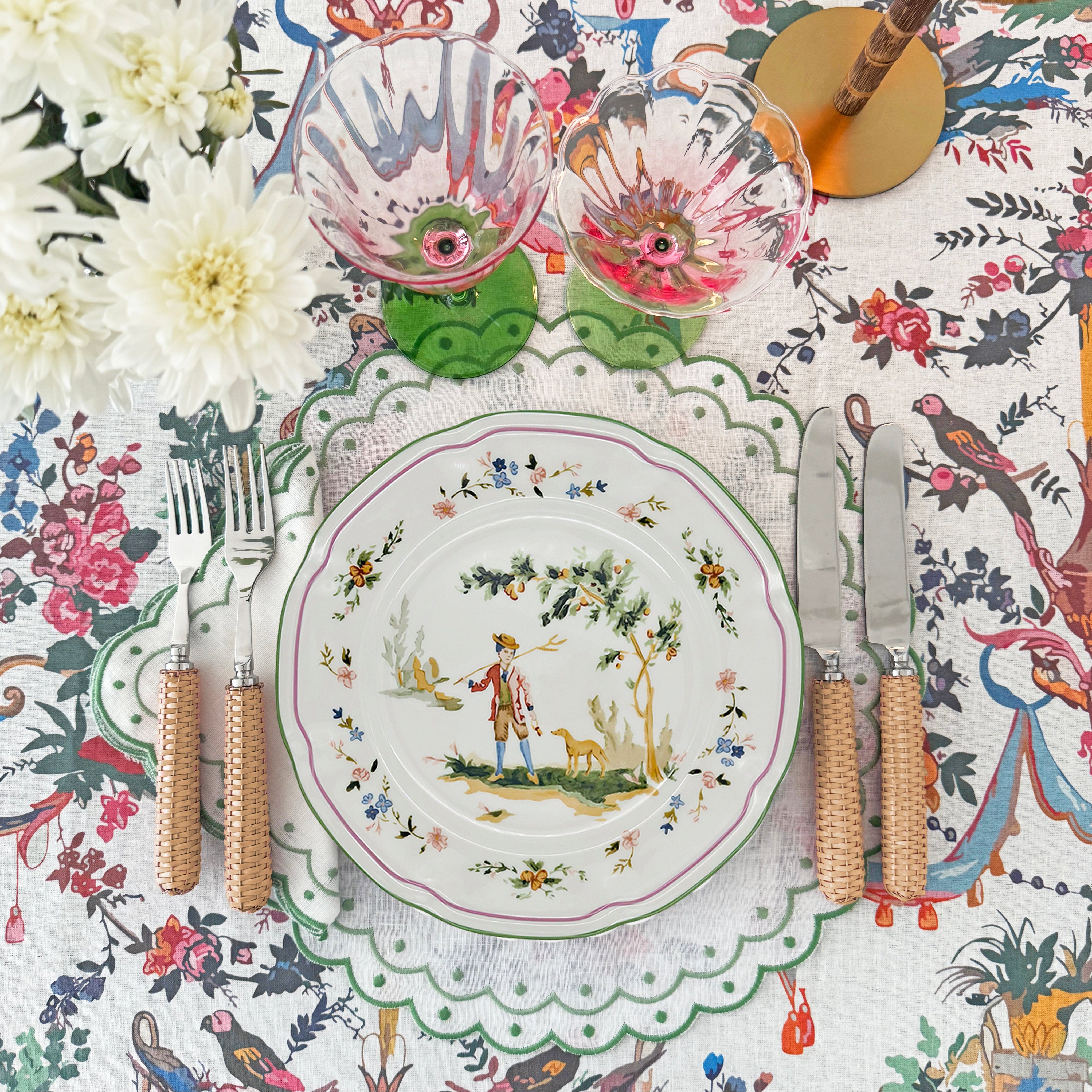

A handblown green water glass does more than hold a place at the table. It catches afternoon light, softens the formality of polished linens, and gives even a simple gathering the pleasing feeling that someone thought about the details. Its color is grounding but never heavy, especially when the glass has the gentle irregularity that only handblown work can offer.
Green glass belongs to the kind of table that feels gathered over time rather than assembled all at once. It is equally at ease beside crisp white linens, painted plates, woven accents, or a vase of garden clippings. The secret is not matching every element precisely. It is choosing pieces that share a sense of ease, color, and occasion.
Why a Handblown Green Water Glass Feels So Special
Machine-made glassware has its place, particularly when uniformity is the goal. Handblown glass offers something different: subtle variation. One rim may be ever so slightly softer than another; a tiny bubble may sit beneath the surface; the color may deepen at the base or thin delicately near the edge. These are not flaws to disguise. They are signs of the maker's hand and the reason each glass feels personal.
That individuality is particularly lovely in green. The hue changes with its surroundings. In bright daylight, it can look fresh and translucent, like leaves after rain. By candlelight, it becomes richer and more atmospheric. A pale celadon reads quietly elegant, while olive and mossy tones bring depth to a table set for fall or winter. Jewel-toned emerald has a more formal presence, though it can still feel relaxed when paired with natural textures.
There is also a practical beauty to colored water glasses. Clear glasses tend to disappear into a busy table, whereas green gives each place setting definition. It introduces color without requiring a patterned cloth or an abundance of florals. For anyone who prefers a table that looks considered but not overworked, that is a useful distinction.
Choosing the Right Shade of Green
The best green is rarely a question of what is universally flattering. It depends on the light in your home, the textiles you reach for most often, and the mood you want guests to feel when they sit down.
Soft sea-glass greens are especially lovely for daytime. They pair naturally with blue-and-white patterns, pale pink flowers, striped linens, and rattan. This is a color family that makes a table feel open, airy, and ready for a long lunch that wanders into the afternoon.
Olive, fern, and moss greens offer more contrast. They are wonderful with warm white, tobacco brown, deep red, plum, and brass. A darker green water glass can give a neutral table instant character, particularly when the room is lit with small lamps or candles. It brings an old-world note without making the setting feel overly themed.
Emerald and bottle green are more dramatic. Use them when you want the glassware to have a stronger visual role, perhaps against a white cloth with low, tonal flowers. These saturated shades are beautiful for holiday tables, but they are not reserved for December. In summer, emerald beside crisp white and leafy branches can look wonderfully fresh.
If you are building a collection, choose a shade you will want to see in more than one season. Green earns its keep because it sits comfortably between blue's coolness and yellow's warmth. It is a color that adapts.
Building a Table Around Green Glassware
A handblown green water glass is most compelling when it has room to be noticed. Start with one clear visual anchor: a tailored tablecloth, a painted placemat, or a patterned plate. Then let the glass provide the color note that ties the setting together.
For an easy daytime table, begin with white or natural linen. Add green glasses, woven placemats, and a small arrangement of white flowers or leafy branches. The result feels polished but relaxed, as though the table was set because friends were coming by, not because an occasion demanded ceremony.
For evening, bring in contrast. Deep green glass looks handsome against a creamy cloth, lacquered tray, or warm metallic accents. Keep flowers low enough for conversation, and use a few pools of lamp or candlelight rather than relying on one bright overhead fixture. The glass will do much of the atmospheric work on its own.
Pattern can be introduced, but it benefits from restraint. If your plates have a lively border, choose a solid linen and let the green glasses repeat at every setting. If the cloth is printed, use simpler plate shapes. A table becomes memorable when the elements converse, not compete.
A Thoughtful Mix, Not a Perfect Match
Matching every glass is beautiful for a formal setting, but a collected look can be just as gracious. Consider using one green glass shape for water and a complementary clear or pale amber glass for another beverage. The palette will feel layered while still remaining orderly.
Variation within the same handblown collection is also part of the charm. Since handmade pieces are not identical, a row of green glasses already has movement. Resist the urge to search for perfect symmetry. A table should feel alive once people gather around it.
Making It Work Beyond the Dining Table
The appeal of a handblown green water glass extends well beyond a seated meal. Keep a pair near a bedside carafe, place one on a tray in the sitting room, or use a single glass for a small handful of stems on a desk or console. Its color gives a quiet lift to everyday corners.
For gifts, green glass is especially thoughtful because it feels both useful and distinctive. A pair makes a lovely gesture for a new home, a birthday, or the friend who always sets a beautiful table. Choose a shape that feels comfortable in the hand, not simply attractive on a shelf. The best objects invite use.
This is where handblown glass quietly earns its place in a home. It can be brought out for a polished supper, certainly, but it should also appear on an ordinary Tuesday afternoon. Beauty becomes more meaningful when it is part of the rhythm of daily life.
Caring for Handblown Glass
Handblown glass rewards a little care, though it need not become precious. If the maker recommends hand washing, follow that guidance, especially for glasses with fine rims, painted details, or delicate applications. Use warm water, a mild soap, and a soft cloth, then dry promptly to preserve clarity.
Avoid sudden shifts in temperature. Pouring very cold water into a glass that has been sitting in a hot sunny window, for example, can put stress on any glass. Store pieces upright with a little breathing room between them rather than stacking, and take special care when carrying several at once.
A few natural variations are expected, but inspect each piece for chips or cracks before setting the table. Handmade glass is meant to be enjoyed, not worried over. Sensible care simply helps it remain part of your gatherings for years to come.
A green glass on the table is a small invitation to linger. Fill it with sparkling water, add a slice of citrus if the moment calls for it, and let the color catch the light as conversation unfolds. The most welcoming tables are not the ones kept for a special day. They are the ones that make an ordinary day feel worth sharing.