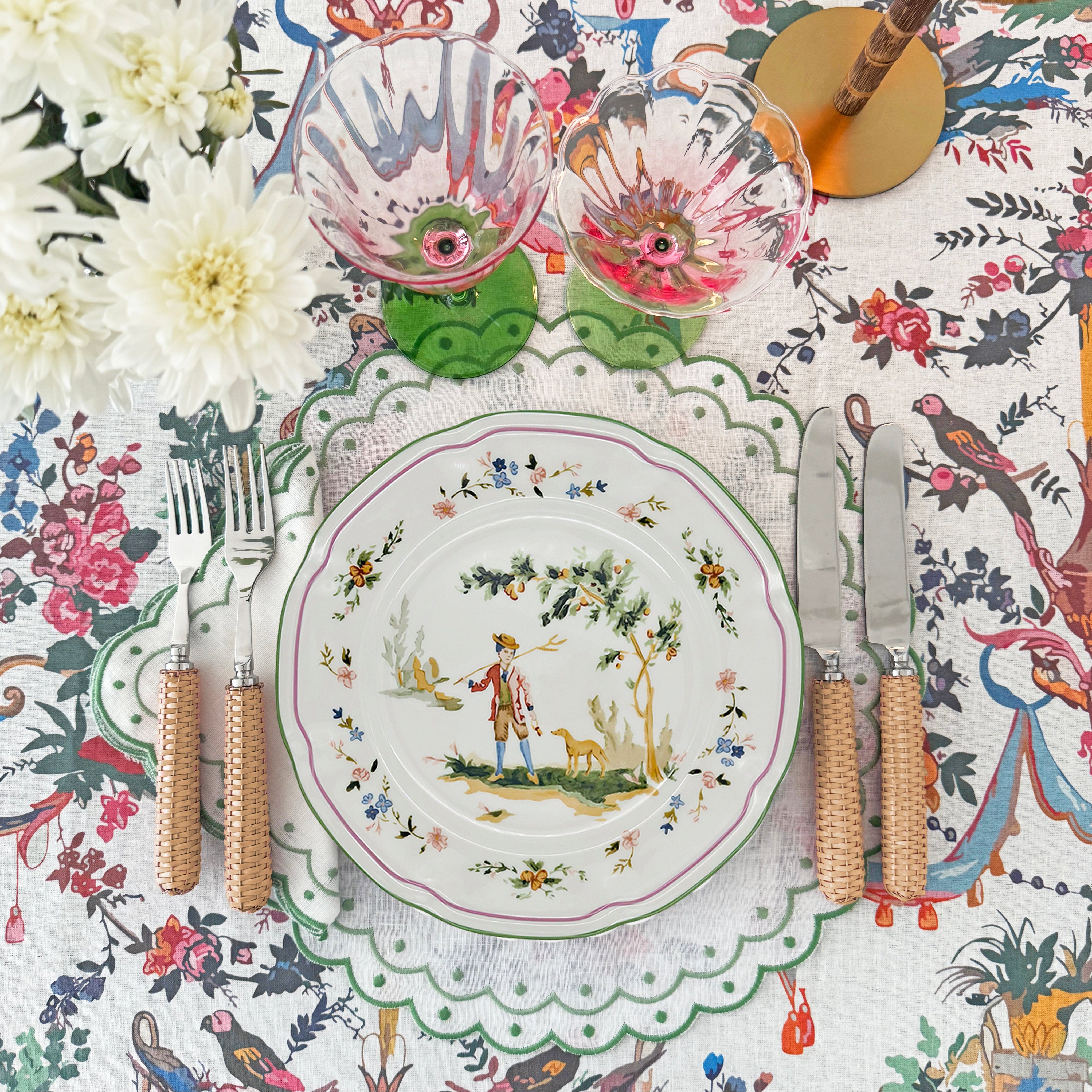

A thoughtfully set table has a quiet way of telling guests they are expected. The right platter, bowl, or tray does more than carry what is being served - it gives the table shape, makes a gesture feel generous, and invites everyone to linger. This guide to choosing serving pieces begins there: with the occasions you love, the people around your table, and the details that make gathering feel distinctly your own.
Begin With the Way You Gather
Before considering finishes or patterns, consider your entertaining rhythm. A long, relaxed Sunday lunch calls for different pieces than an intimate candlelit supper or a holiday table filled with family. The most useful collections do not belong to one occasion alone. They move easily between an afternoon on the terrace, a festive drinks table, and a beautifully layered meal indoors.
Think about what you reach for most often. If you regularly set out salads, fruit, or shared sides, a generous serving bowl will earn its place quickly. If you enjoy arranging small bites or sweets for guests, an oval platter offers an elegant sense of order. Trays are equally versatile, bringing polish to a bar cart, coffee table, bedside, or entryway when not in use for entertaining.
Choose pieces that support the way you actually welcome people. A smaller assortment that appears often will feel far more luxurious than a cabinet of beautiful objects waiting for a rare occasion.
Guide to Choosing Serving Pieces by Shape
Shape creates both function and atmosphere. It also determines how easily a piece works with the rest of your tabletop. Start with a few foundational silhouettes, then add distinctive shapes that give your collection personality.
The generous bowl
A wide, low bowl feels convivial and effortless. It gives a shared dish room to breathe and allows guests to serve themselves comfortably. A deeper bowl offers more structure and is especially useful when you want a table to feel layered rather than flat. One or two beautiful bowls in varied scales can carry you through countless gatherings.
The versatile platter
An oval or rectangular platter is among the most adaptable serving pieces you can own. Its elongated form creates a natural focal point down the center of a table, and it pairs gracefully with round dinner plates. Round platters, by contrast, soften a formal setting and are lovely for more intimate arrangements.
When deciding between them, notice the shape of your table. A long table often welcomes an oval or rectangular platter, while a round table tends to favor circular forms. This is a guide, not a rule. A thoughtfully chosen contrast can make a table feel more collected and less prescribed.
The raised stand
A pedestal or cake stand introduces height, which is often the missing element on an otherwise beautiful table. It gives fruit, pastries, flowers, or a celebratory dessert a sense of occasion. Use one sparingly. Too many elevated pieces can interrupt conversation, but a single stand creates a lovely focal point.
The tray
A tray is the quiet workhorse of a well-appointed home. It corrals glassware, presents refreshments, and makes even a simple arrangement look intentional. Choose one with enough surface area to be useful, rather than selecting a size that is merely decorative. Handles can be charming, but a clean-edged tray is often easier to layer into different rooms and settings.
Let Scale Do the Work
A serving piece can be exquisite and still feel wrong if its scale is off. A platter that is too small makes a generous spread look crowded; a bowl that is too large can leave a small table feeling sparse. Consider the dimensions of your dining table, your usual guest count, and the size of the place settings you use most.
As a general approach, select one statement-sized serving piece, then surround it with medium and smaller companions. The variation keeps the center of the table from looking like a row of matching objects. It also lets you create a natural rhythm: a large bowl near the middle, a low platter nearby, and a small dish tucked in where guests can reach it.
Leave room for flowers, candlelight, and conversation. Serving pieces should make a table feel abundant, never obstructed. If guests must reach around an elaborate arrangement or cannot see one another across the table, edit with confidence.
Choose Materials for Both Beauty and Use
The material of a serving piece sets its mood. Glazed ceramic feels timeless and welcoming, whether it is crisp white, richly colored, or hand-painted with a playful border. Woven materials bring texture and ease, particularly for daytime entertaining or outdoor tables. Glass adds lightness and sparkle, while lacquered or patterned trays can introduce a more graphic note.
There is no need for every piece to match. In fact, a table often becomes more interesting when materials are layered with intention. Pair a polished ceramic serving bowl with woven placemats, or set a painterly platter against a tailored tablecloth. The key is to repeat a color, finish, or motif somewhere else on the table so the mix feels considered.
Practicality deserves equal attention. Consider how a piece feels in the hand, whether it is comfortable to pass, and how easily it fits into your routines after guests have gone home. Delicate details can be worth preserving for special celebrations, while durable, easygoing pieces are the ones that make everyday rituals feel elevated.
Build a Collection, Not a Matched Set
A fully coordinated suite can be beautiful, but a collection gathered over time has a warmth that cannot be replicated. Start with a dependable base in a color or finish you will not tire of, then introduce personality through accent pieces. A scalloped edge, painted stripe, basketweave texture, or unexpected color can make even a familiar table feel fresh.
This approach also gives you more freedom across seasons. Soft greens and woven textures may feel right for spring lunches, while deep blue, warm red, or rich brown can bring welcome depth to autumn and holiday gatherings. Your essential shapes remain the same; the expression changes with linens, flowers, glassware, and a few well-chosen accents.
If you are drawn to patterned dinnerware, let one serving piece echo that pattern or color rather than competing with it. If your place settings are already detailed, a simple serving bowl or clear glass stand can create a calm place for the eye to rest. Balance is what makes a layered table feel gracious.
Consider the View From Every Seat
Serving pieces should look lovely from above, but guests experience them from eye level. Low, open shapes keep sightlines clear and make a table feel inviting. Taller pieces are best placed at the ends of a long table, on a nearby console, or used as one deliberate centerpiece rather than several competing ones.
Also consider reach. A shared piece should be accessible to more than one guest without becoming an awkward interruption. On a larger table, creating two smaller arrangements can be more welcoming than placing every serving piece in the center. It gives the table a relaxed generosity and ensures that no one feels left out of the moment.
Make Room for a Little Romance
The finest serving pieces are not simply useful. They hold a sense of memory: the platter brought out for birthdays, the woven tray that signals drinks on the porch, the painted bowl that always appears when dear friends come over. These repetitions become part of a home’s language.
Choose what you will be happy to see often. A distinctive edge, a favorite shade, or the soft gleam of a beautifully finished tray can turn an ordinary gathering into something guests remember. Let your collection grow with the life around it, one piece at a time, and let each addition make room for the moments meant to be shared.