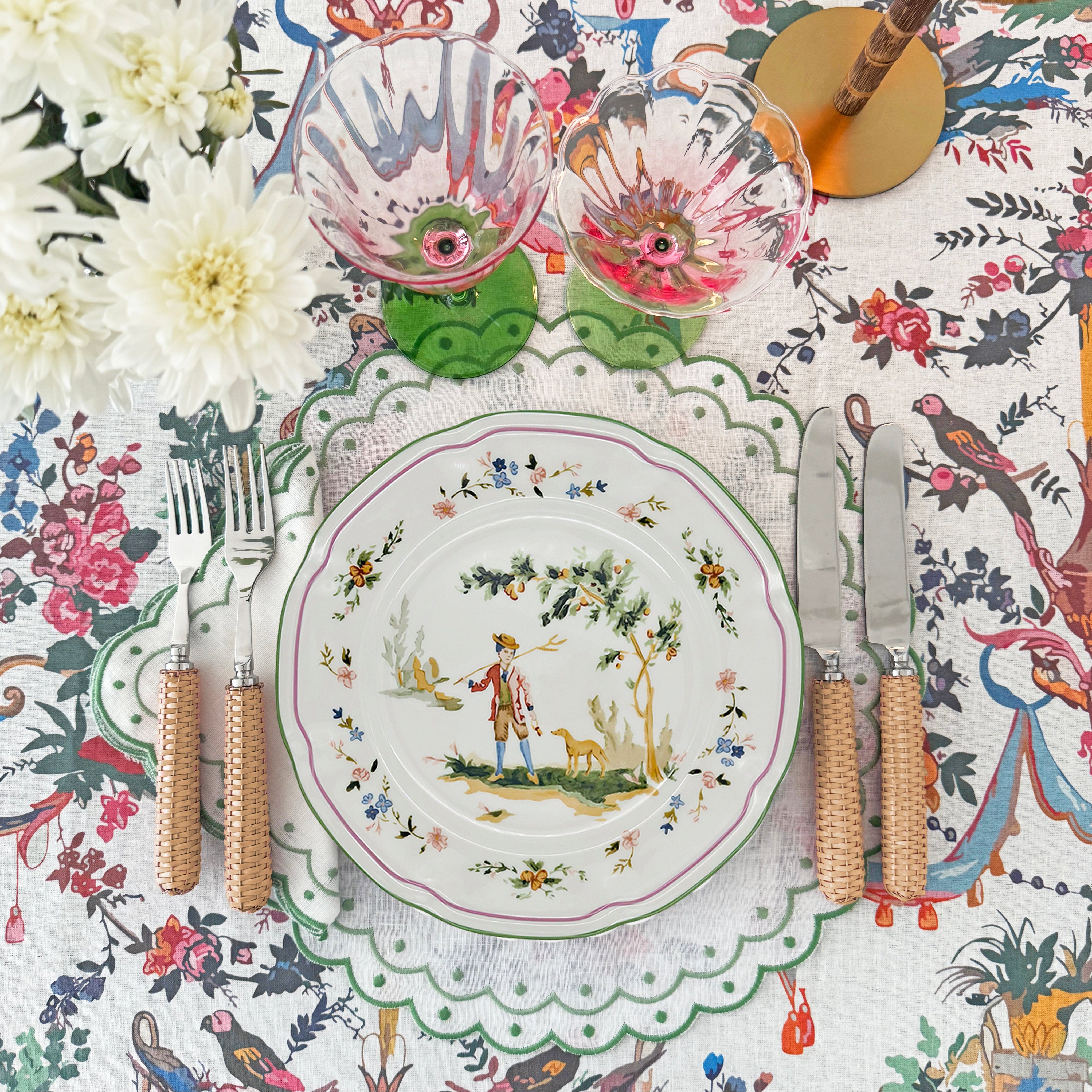

A beautiful table is only half the invitation. As daylight softens and glasses catch the last of the afternoon sun, wicker shade lamps create the kind of atmosphere that encourages guests to settle in, stay a little longer, and enjoy the pleasure of being together. Their woven texture feels relaxed but considered, bringing an easy warmth to settings that might otherwise feel overly polished.
For a home shaped around gathering, lighting should do more than brighten a corner. It should flatter the table, create intimacy, and add another thoughtful layer to the room. Wicker does this with remarkable ease. It introduces natural material, gentle pattern, and a warm diffusion of light without asking for much attention.
Why Wicker Shade Lamps Feel So Right
Wicker has a particular gift for making formal elements feel more inviting. On a crisp linen tablecloth, a woven shade softens the scene. Beside hand-painted plates or colorful glassware, it offers texture without competing for the spotlight. It is a material that feels equally at home in a sunlit breakfast room, on a covered porch, or at a candlelit supper where every seat has been set with intention.
The appeal is not simply rustic. The right wicker shade can look tailored, sculptural, and quietly luxurious. Fine weaving, a pleasing silhouette, and a thoughtful proportion transform a familiar material into something distinctly decorative. It is the difference between a room that is merely furnished and one that feels collected over time.
There is also a practical beauty to the filtered glow. Rather than casting a hard, direct beam, a shade disperses light in a softer pattern. Faces look warmer, tabletop details become more inviting, and the overall mood feels less like an occasion to be managed and more like a gathering to be enjoyed.
Choosing Wicker Shade Lamps for Your Setting
The most successful lamp is one that considers scale before style. A petite lamp with a wicker shade can bring a lovely sense of occasion to an intimate table for two or a small side table. A larger shade has more presence and can anchor a generous console, garden table, or seating area.
For dining tables, low-profile lamps are usually the most gracious choice. Guests should be able to see one another across the table without a shade interrupting the conversation. A compact cordless lamp is especially useful here, since there are no cords to weave around flowers, place cards, or serving pieces. It lets the table remain composed from every angle.
Color matters as much as proportion. Natural wicker is wonderfully versatile, pairing easily with whites, blues, greens, warm neutrals, and patterned linens. Darker woven finishes can feel more dramatic in rooms with richly painted walls or antique woods. A painted base, meanwhile, introduces a little more personality and can echo a color found in the placemats, napkins, or flowers.
The decision between a more open weave and a tightly woven shade depends on the mood you want to create. An open weave casts visible texture and a slightly more playful pattern of light. A tighter weave gives a more even, restrained glow. Neither is inherently better. For a breezy daytime terrace, an open weave can be charming; for an evening table where a calm, flattering light is the priority, a denser shade may be the wiser choice.
Cordless Lamps Make Entertaining Easier
Cordless wicker shade lamps have earned their place in a well-appointed home because they solve a small but meaningful problem: beautiful light often needs to go where outlets do not. A center table, an outdoor supper, a bar cart, or a guest room bedside table becomes instantly more useful when illumination is not dictated by a wall.
They also make transitions feel effortless. Bring a pair from the entry to the table as guests arrive, then move them to a sitting area once coffee is poured. The ritual takes seconds, yet it changes the room. This kind of flexibility is especially valuable when you enjoy setting a scene that evolves through the evening.
Look for a warm light temperature rather than a cool white cast. Warm light is more forgiving, more inviting, and better suited to entertaining. If a lamp has adjustable brightness, use the higher setting for an early gathering and lower it as the evening becomes more intimate. The goal is not brightness for its own sake. It is enough light to make everyone feel comfortable and everything look lovely.
Where to Place a Wicker Shade Lamp
A single lamp can be a charming accent, but pairs tend to create a more intentional rhythm. Two lamps at either end of a long table make the setting feel balanced without appearing too symmetrical. On a console, a pair frames a floral arrangement, tray, or favorite decorative object with an inviting glow.
In a living room, place one near the end of a sofa or on a small occasional table where it can soften the transition from day to evening. In an entry, a wicker-shaded lamp offers an immediate signal that the home is ready to receive. It is a modest gesture, though one guests often remember.
Outdoor placement calls for a little more care. A covered porch or protected terrace is ideal, especially for cordless lamps designed to move with you. Wicker is naturally relaxed in spirit, but it should not be left exposed to rain or prolonged dampness. Bring lamps inside after the gathering, or store them in a dry, sheltered spot to preserve their finish and shape.
Styling the Light Without Overworking It
The most appealing tables rarely rely on a single decorative idea. Wicker shade lamps are at their best when they are part of a layered composition: linen beneath the hands, a low arrangement of flowers, colored glass catching the glow, and perhaps a lacquered tray waiting nearby for after-dinner drinks. Each element contributes, but none needs to dominate.
Keep florals low and loose around tabletop lamps. Tall arrangements and large shades can compete for sightlines, while smaller vessels of garden roses, greenery, or seasonal branches allow the lighting to remain part of the conversation. If the table is narrow, use one lamp at the center with a few petite bud vases nearby rather than crowding the surface.
Wicker also offers a lovely counterpoint to more polished materials. It tempers glossy ceramics, crystal, brass, and lacquer with a note of ease. This balance is particularly useful when a setting has beautiful pieces but begins to feel a touch too precious. A woven shade reminds everyone that elegance and comfort belong together.
For a daytime gathering, let the lamps function as decorative texture first, then turn them on as light begins to fade. For evening, build the atmosphere around them from the start. Combine their low glow with candles at varying heights, leaving enough open space for glasses, flowers, and the easy movements of a shared table.
A Small Detail With Lasting Presence
Great entertaining often comes down to what guests feel rather than what they can name. They may not remember every napkin fold or flower variety, but they will remember a table that made them feel welcome, relaxed, and delighted to be there.
That is the quiet charm of wicker shade lamps. They offer more than illumination. They bring texture to the room, softness to the evening, and a sense that the moment has been thoughtfully prepared. Place one where people naturally gather, let the light fall gently, and allow the rest of the evening to unfold.