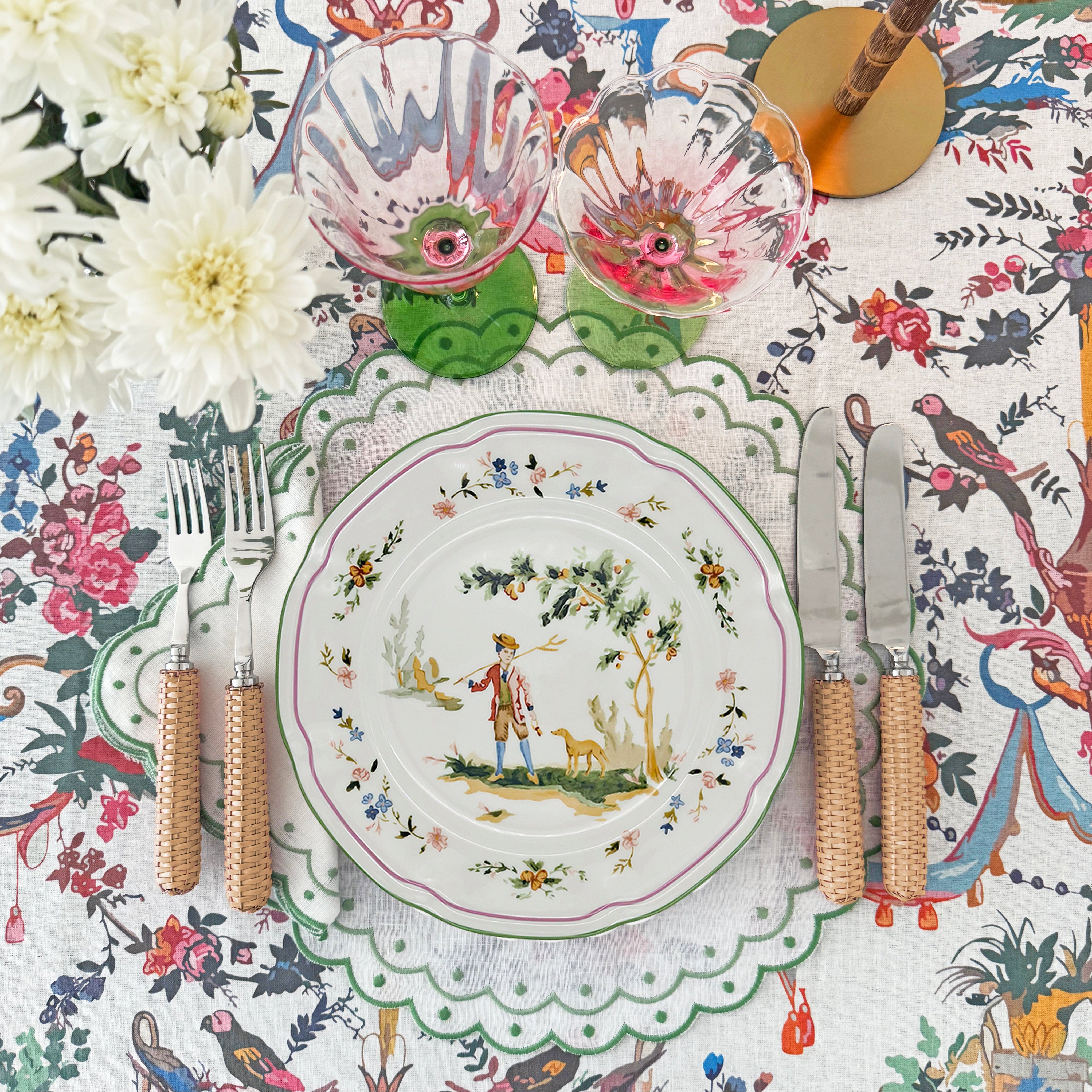

A table can be beautifully set long before the first glass is poured. The most memorable gatherings are often shaped by the finishing layers: a linen with a graceful drape, a small lamp casting a flattering glow, a tray that gives a favorite bottle or bouquet a proper place. Thoughtfully chosen tabletop accessories turn an ordinary surface into an invitation to linger.
These pieces are not reserved for holidays or formal occasions. They are the details that make a weekday lunch feel considered, a Sunday game of mahjong feel festive, and an evening with friends feel warmly personal. The secret is not owning more. It is choosing a few versatile accents with presence, then allowing them to tell a slightly different story each time you gather.
Why tabletop accessories matter
Dinnerware establishes the canvas, but accessories create the atmosphere. They introduce texture, height, color, and candlelight - the elements that make a table feel alive rather than merely arranged. A hand-painted edge may bring charm, while a woven placemat lends a relaxed, collected note. A cordless lamp offers intimacy without asking anyone to reach across the table to light a taper.
There is also a practical elegance to these details. Placemats protect a tabletop while giving each setting definition. Trays corral the pieces that might otherwise feel scattered. Lamps and candles create a sense of occasion as daylight fades. The right accessory earns its place by being useful and lovely at once.
For a table that feels personal rather than overly coordinated, aim for conversation between materials. Pair crisp linen with the warmth of a woven texture, glossy glassware with a matte ceramic finish, or a tailored cloth with playful painted details. Matching every element can be striking, but contrast is often what gives a setting its ease.
Begin with linens and layers
A tablecloth or runner is one of the quickest ways to change a room's mood. Choose a full cloth when the occasion calls for softness and generosity, especially around a larger table. A runner can feel lighter and more architectural, leaving beautiful wood visible while giving the center of the table a defined path.
Let placemats set the rhythm
Placemats do more than mark a seat. They establish the rhythm of the table, creating repetition without making the setting feel rigid. Woven styles bring a relaxed, sun-warmed character that works beautifully for long lunches and informal suppers. Scalloped, embroidered, or boldly colored designs make a stronger statement and can carry a simple place setting with confidence.
Consider shape as carefully as color. Round placemats soften a rectangular table and add a pleasing sense of movement. Rectangular styles feel tailored and classic. Neither is universally better; the best choice depends on the table, the dinnerware, and how formal or playful you want the gathering to feel.
Napkins offer another opportunity for expression. A quiet neutral can calm a patterned plate, while a saturated hue or contrasting trim can wake up an all-white setting. Fold them simply. A relaxed fold, a ribbon, or a single sprig placed on top is usually enough. The beauty should feel effortless, never overworked.
Bring in light at table level
Overhead lighting is rarely as flattering as the glow created on the table itself. Small pools of light make guests feel gathered in, particularly for an evening occasion. Rechargeable cordless lamps are especially useful because they bring that warmth exactly where it is wanted, without visible cords interrupting the view.
A pair of lamps at either end of a long table offers balance. For a round table, one lamp paired with low candles or a petite arrangement can be all that is needed. Keep the scale low enough for easy conversation. Guests should see one another, not peer around a centerpiece.
Candles bring a more traditional romance, and they work particularly well beside a lamp rather than in place of one. Use unscented candles at the table so the setting feels inviting without competing with the moment. If using flowers, choose a low arrangement with an unfussy shape. A few loosely gathered stems in a small vessel often feel more gracious than one towering display.
Use trays to make the table feel composed
A tray is one of the most useful decorative accessories in a home because it gives beautiful objects a sense of intention. On a buffet or sideboard, it can hold a candle, matches, napkins, and a small vase. On a coffee table before guests arrive, it can gather a stack of cocktail napkins, a favorite game, and a pair of lamps into a welcoming vignette.
At the table, a tray is best used with restraint. It may anchor a low centerpiece or hold after-dinner sweets, but it should not become a barrier between guests. Think of it as a frame, not a stage. Leave enough open space for hands, glasses, and the easy movement that makes a gathering feel relaxed.
The material matters here. A woven tray adds texture and a sense of casual polish. Lacquered or painted finishes feel more tailored and can introduce a joyful note of color. Select a style that complements your linens without duplicating every pattern. A room feels more collected when its pieces relate rather than match exactly.
Choose tabletop accessories worth collecting
The most satisfying tables evolve over time. Instead of purchasing an entire look for a single event, collect tabletop accessories that can move easily from season to season. A set of lamps in a flattering neutral, a few richly colored napkins, versatile woven placemats, and a tray with a distinctive silhouette can be styled in dozens of ways.
This approach also makes entertaining feel less daunting. You already have the ingredients; you are simply arranging them differently. In spring, pair light linens with fresh green accents. For late summer, bring in natural fibers and bright, cheerful glassware. As the evenings grow cooler, use deeper tones, candlelight, and a more generous tablecloth. The table changes, but your point of view remains recognizable.
When choosing a new piece, ask whether it has more than one life. Can the lamp move from a guest room to a side table? Can the placemats work beneath everyday plates as well as hand-painted dinnerware? Can the tray be used for a morning coffee, a birthday gift, or an evening aperitif? Versatility is not a compromise in a well-appointed home. It is what allows beautiful things to become part of daily life.
Edit for comfort, not perfection
A generous table should never feel crowded. Before guests arrive, sit down at each place setting and notice what is within reach. There should be room for a glass, a napkin, and the natural gestures of conversation. If an accessory feels like an obstacle, remove it. An open, comfortable table is always more elegant than one filled with beautiful things that have nowhere to go.
The same principle applies to color. One statement element is often enough: a patterned cloth, vibrant placemat, painted plate, or colorful lamp. Let the remaining pieces support it with quieter textures and tones. This creates a setting that feels confident and layered rather than busy.
Above all, let your table reflect the kind of gathering you hope to have. A few thoughtfully chosen details can signal warmth, celebration, and a genuine pleasure in having people near. Set out the linens, switch on the lamps, and make room for the stories that will unfold there.