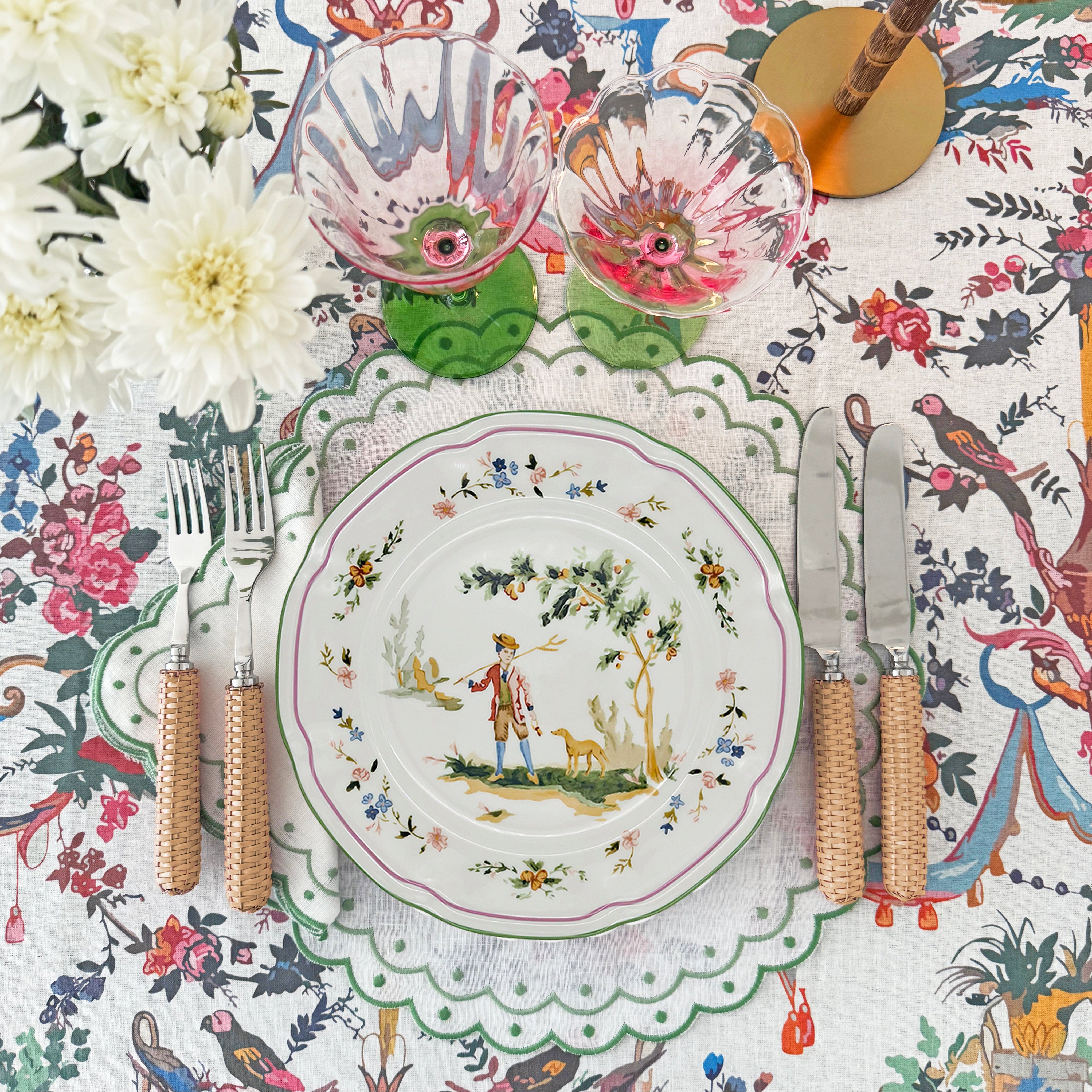

A table remembers the details: the blue rim that frames a summer lunch, the hand-painted flower that appears beneath a slice of cake, the familiar plate brought out for people who matter. That is the quiet power of timeless ceramic patterns. The most lasting ceramic designs do not chase a single season. They lend character to ordinary Tuesdays and make a candlelit gathering feel considered without feeling overdone.
Why Timeless Ceramic Patterns Endure
Timelessness is not the absence of personality. Quite the opposite: a ceramic pattern lasts because it has enough point of view to be recognizable, yet enough restraint to welcome new company at the table. It should feel as lovely beside crisp white linens as it does with a striped cloth, a woven placemat, or a bowl of just-picked greenery.
The designs with real staying power tend to draw from visual languages that have been admired for generations. Delicate botanicals, crisp borders, painterly fruit, small-scale geometrics, and classic blue-and-white motifs all carry a sense of continuity. They reference history without requiring a formal setting or a room arranged like a museum.
For the gracious host, this matters. Tableware is not simply something to pull from a cabinet before guests arrive. It is part of the welcome. A patterned plate suggests that someone thought about the occasion, even when the occasion is only an unhurried afternoon with two close friends.
Pattern Should Bring Energy, Not Noise
A beautiful pattern has a rhythm. It guides the eye around a place setting, gives a table a center of gravity, and creates a natural conversation point. But there is a difference between a pattern that feels alive and one that competes with every other element on the table.
Scale is often the deciding factor. A generous floral or a broad painted border can hold its own on a large, open table, particularly when the linens are simple. A smaller repeat, such as a tiny leaf, dotted edge, or modest geometric, is often more flexible for layered settings. It adds interest at close range while allowing glassware, flowers, and candlelight to have their moment.
Color works in much the same way. Blue, green, soft red, and warm ochre have endured because they can feel both cheerful and composed. A pattern with a limited palette is generally easier to use across the year. That does not mean every piece must be neutral. A joyful dose of color can become the element guests remember. The key is giving it space around it.
The charm of an imperfect hand
Hand-painted ceramics offer something printed perfection cannot quite replicate: evidence of the maker’s hand. A brushstroke may vary slightly around a rim. One blossom may sit a touch differently from the next. These subtle shifts are not flaws to hide. They give a setting warmth and make each piece feel collected rather than mass-produced.
This is especially appealing for entertaining because no table is ever completely still. Light changes, guests move, napkins unfold, and conversations grow. Ceramics with gentle variation belong in that lived-in atmosphere. They are polished, but never precious.
Begin With One Pattern You Love
The easiest way to build a lasting collection is to start with one pattern that makes you want to set the table. Not the one you think you are supposed to choose, and not necessarily the most formal option. Choose the pattern that suits how you gather.
If your home leans toward palm-lined color and cheerful sunlight, a botanical or painterly fruit motif may feel immediately at home. If your entertaining style is more tailored, a narrow band, lattice, or small repeating motif offers quiet elegance. For a house that blends country ease with a little formality, look for designs with organic shapes and a softened palette.
Then let that first pattern establish a direction rather than a rule. A matching set can be beautiful, but a table becomes more personal when it evolves. Pair patterned dinner plates with plain salad plates one week, then reverse the arrangement for a different feeling. Add a solid-colored serving bowl that echoes one shade from the design. Repeat a single color in your candles or napkins, and the mix will feel intentional.
There is a practical benefit to this approach as well. Collecting in layers allows you to choose pieces for the way you actually live. You may want enough of one design for an intimate supper, while keeping versatile solids on hand for larger gatherings. The goal is a table that can expand with ease, not a collection that requires every place setting to look identical.
Pairing Ceramics With Linens and Light
Ceramics are often where color begins, but linens determine the mood. A patterned plate looks fresh against a solid tablecloth, particularly one in ivory, soft blue, leafy green, or a sun-warmed neutral. This contrast allows the shape and color of the ceramic to come forward.
When you do choose pattern on pattern, vary the scale. A small floral plate can sit beautifully on a broad stripe. A detailed border pairs well with a loose, oversized check. What feels difficult is using two patterns that are equally dense and equally loud. Give one of them the leading role, and let the other act as an accent.
Light is the finishing layer that makes the table feel welcoming after the sun goes down. A low cordless lamp or a few softly glowing candles can bring out the painted details in a ceramic glaze and make even a familiar setting feel special. Keep arrangements low enough for easy conversation. The most elegant table is one that encourages people to stay awhile.
A note on texture
Texture is a useful counterpoint to painted ceramic. Woven placemats, crisp linen napkins, smooth glassware, and polished serving pieces create contrast without adding more color. This is often the answer when a patterned table feels one element short of complete. Rather than adding another print, add a natural material or a change in finish.
Let the Occasion Shape the Setting
A timeless pattern should not be reserved for milestone evenings. Its beauty comes from being used, admired, and folded into the rituals of a home. Set a floral dessert plate beneath a birthday cake. Use a striped border for a Sunday lunch. Bring out a favorite painted bowl for small gifts, place cards, or a cluster of seasonal fruit.
Still, different occasions invite different levels of layering. For a relaxed daytime gathering, let one patterned plate and a textured placemat do most of the work. At a more polished evening table, build depth with a charger, a patterned dinner plate, a folded napkin, and warm light. Neither approach is more correct. The best choice depends on the size of the gathering, the season, and how much atmosphere you want the table to carry.
This is where collectible pieces earn their place. A pattern that feels right for a casual lunch should also be capable of becoming more dressed up with the addition of better linens, glassware, and a few thoughtful details. Versatility is not boring. It is the freedom to make a beautiful table without beginning from scratch every time.
Choosing Pieces You Will Keep Reaching For
Before adding a new ceramic pattern, consider how it will live alongside what you already own. Look at the colors in your linens, the finishes of your glassware, and the serving pieces you use most often. A new pattern does not need to match them exactly. It simply needs a bridge, whether that is a shared blue, a similar warmth in the glaze, or a complementary scale.
Also consider shape. Softly scalloped edges and gently irregular rims bring romance to a setting, while clean round forms and tailored borders feel more architectural. Mixing shapes can be lovely, but it helps to repeat one element, such as color or material, so the table still feels composed.
Most of all, choose ceramics that invite use. The enduring pieces are rarely the ones left hidden for a future occasion. They are the plates that make a weekday table feel cared for and a gathering feel like it has been anticipated. Set out the pattern you love, light the lamps, and make room for the people who turn a beautiful table into a lasting memory.