
A serving bowl is often the first thing guests reach for and the last thing they remember. In the conversation around ceramic versus porcelain serveware, the best choice is less about choosing a winner and more about choosing the feeling you want to set on the table: relaxed, collected, crisp, celebratory, or quietly formal.
Both materials can be beautiful enough for a candlelit supper and useful enough for a sunny lunch that lingers long past schedule. Their differences lie in the details - weight in the hand, fineness at the rim, surface finish, color, and the way a piece holds its place among linens, glassware, and flowers.
Ceramic Versus Porcelain Serveware: The Essential Difference
Ceramic is the broad family name for objects formed from clay and fired at high temperatures. Earthenware, stoneware, and porcelain all belong within it. So, technically, porcelain is ceramic, but the two terms are often used to describe distinct looks and performance qualities in everyday shopping.
When people refer to ceramic serveware, they often mean stoneware or earthenware: pieces with a pleasing sense of substance, soft silhouettes, and a hand-finished character. Depending on the clay body and glaze, ceramic can have gentle variations in color and texture that make a table feel personal rather than overly matched.
Porcelain is made from a refined clay blend and fired at especially high temperatures. The result is typically denser, less porous, and more finely finished. It is known for its smooth surface, clean color, and delicate-looking profile. Some porcelain pieces have a subtle translucence when held toward the light, though that is not essential to their appeal.
Neither material is automatically more beautiful. A generous, hand-painted ceramic platter can bring warmth and movement to a table, while a sculptural porcelain bowl can give the same setting a sense of calm precision. The distinction is about character.
Choose Ceramic When You Want Warmth and Presence
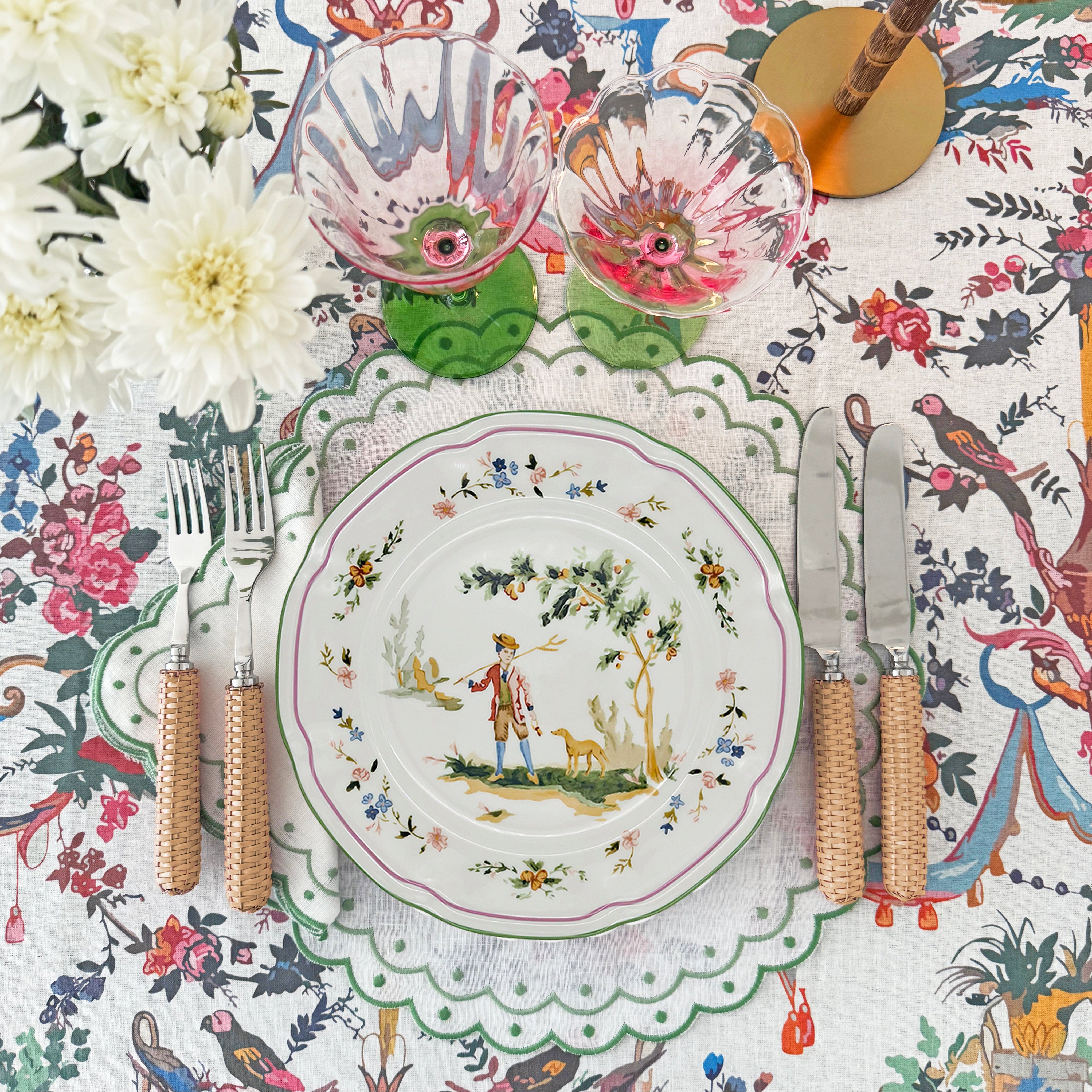
Ceramic serveware has a grounded quality that makes an occasion feel inviting from the start. It often has more visual depth than a perfectly uniform surface: a softly speckled glaze, a gently uneven edge, or a brushstroke that reveals the hand behind the piece. These details pair especially well with woven accents, patterned tablecloths, colored glass, and fresh flowers gathered without too much fuss.
Its weight can also be part of the pleasure. A substantial serving bowl or pitcher feels reassuring when passed around the table and lends a sense of occasion to even the simplest spread. For hosts who prefer a layered table with color, pattern, and a little collected charm, ceramic offers an easy starting point.
There are practical considerations. Ceramic pieces vary greatly according to their clay body, glaze, and construction. Some are wonderfully durable for frequent use; others are better reserved for gentler handling. Glazed surfaces can disguise small marks beautifully, while unglazed or highly textured finishes may need more thoughtful care. Always follow the maker's guidance on dishwashing, microwaving, and temperature changes rather than assuming every ceramic piece behaves the same way.
Ceramic is particularly lovely when the goal is abundance. Think of a wide bowl placed at the center of a linen-covered table, smaller dishes arranged for passing, or a painted tray holding glasses at the start of an afternoon gathering. It makes generosity look effortless.
Choose Porcelain When You Want Refined Versatility
Porcelain has a different kind of confidence. It tends to feel lighter and more tailored, even when the silhouette is generous. Its smoothness gives colors and painted details a particularly clean presentation, making it a natural companion for polished silver, crisp linens, and an evening table where every element has been considered.
Because porcelain is fired to high temperatures and is generally dense, it is often a strong choice for pieces that will see regular use. Fine does not have to mean fragile. Many porcelain serving pieces are made to move comfortably from a weekday table to a holiday gathering, which is precisely why they have remained a classic in well-loved homes.
Porcelain also excels when you want the table to feel edited rather than busy. A white or softly colored porcelain serving piece can let bold linens and floral arrangements take the lead. Conversely, porcelain with a painted border or playful motif can add interest without the visual weight of a thicker, more rustic form.
The trade-off is largely aesthetic. If your entertaining style leans relaxed, textural, and slightly imperfect in the most charming way, very sleek porcelain may feel a touch formal unless you soften it with patterned napkins, woven placemats, or colorful glassware. Its restraint is a virtue, but it asks the rest of the table to join the conversation.
Consider the Table, Not Just the Material
The most useful serveware does more than hold what you bring to the table. It sets the pace of the gathering. Before choosing between ceramic and porcelain, consider the setting you create most often.
For long lunches outdoors, a ceramic serving bowl with a painterly finish can feel at home beside striped linens and a cluster of small lamps. For a more formal evening, porcelain platters and serving dishes offer a composed backdrop that makes glassware and flowers feel intentional. For a mixed table, use porcelain as the quiet foundation and introduce ceramic through one expressive centerpiece, such as a patterned bowl or a sculptural tray.
Scale matters as much as material. A dramatic platter can become the anchor of a table, while a set of smaller bowls encourages guests to reach, share, and settle in. Consider how a piece will be carried, passed, and stored, too. The loveliest object is one you will bring out often.
Weight, Edges, and Finish Are Worth Noticing
If you are choosing in person, hold the piece. Notice whether its weight feels graceful or cumbersome when full. Run a finger along the rim to see if it feels delicate, softly rounded, or generously substantial. Look at the foot of the piece and the finish underneath, where thoughtful craftsmanship is often easiest to spot.
Glaze deserves attention as well. A glossy porcelain surface reflects candlelight beautifully and offers a formal gleam. A satin or semi-matte ceramic glaze feels quieter and more tactile. Neither is inherently better, but a table becomes more cohesive when the finish of the serveware relates to the mood of the linens, lighting, and decorative accents around it.
Mixing Ceramic and Porcelain With Ease
A table does not need to pledge allegiance to one material. In fact, mixing the two can make a setting feel collected over time rather than purchased all at once. The key is to repeat one visual thread: a shared palette, a similar edge detail, a consistent floral motif, or a common warm-white ground.
Try pairing a porcelain platter with ceramic condiment bowls in a coordinating color, or place a hand-painted ceramic centerpiece on a table set with clean porcelain plates. The contrast between refined smoothness and artisanal texture adds dimension without creating disorder. Keep the rest of the elements simple enough for those material differences to read as intentional.
Duggan Society approaches the table as a place where pieces can be layered, enjoyed, and brought back out season after season. A carefully chosen serving piece should feel special, certainly, but never so precious that it remains hidden in a cabinet.
Care That Keeps Serveware Beautiful
Porcelain and glazed ceramic generally appreciate the same kind of consideration: avoid abrupt shifts between hot and cold, do not stack pieces carelessly, and use soft separators when storing delicate rims or painted surfaces. A crowded cabinet can do more damage than an evening of entertaining ever will.
For pieces with metallic details, handwashing is often the wisest choice. For hand-painted or highly textured ceramic, gentler washing can preserve the finish and prevent wear over time. Again, maker-specific care instructions matter more than broad rules, especially for collectible pieces.
A small amount of thought at the end of the evening helps keep a favorite serving bowl ready for the next invitation, whether that is a holiday table or an ordinary Tuesday made a little lovelier.
Choose the piece that makes you want to set the table before anyone has arrived. When serveware invites you to gather, pass, linger, and celebrate the people around it, it has already done its most important work.