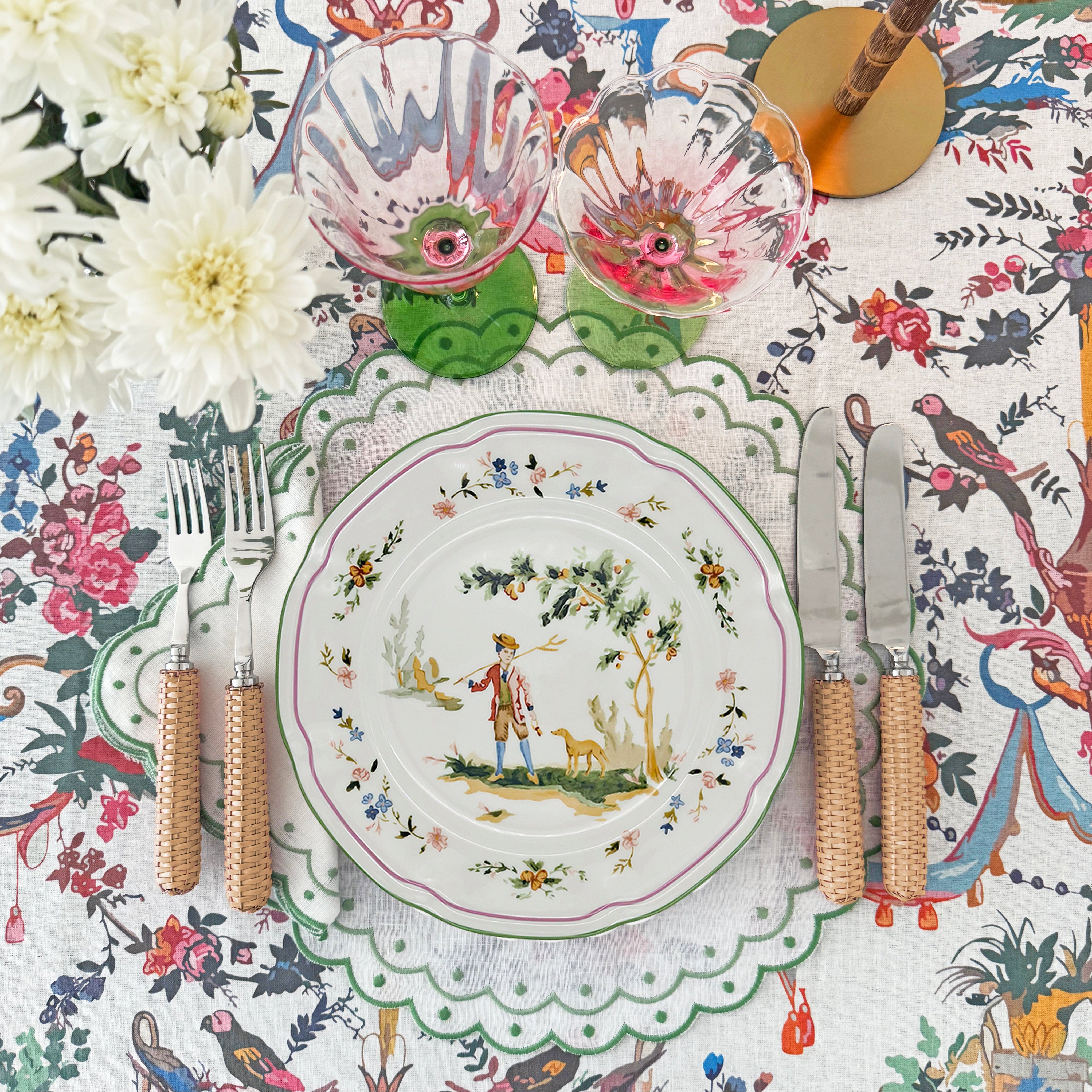

A beautifully set table can lose its charm under a harsh overhead fixture. Fabric shade lamps change that immediately, casting a gentle pool of light that makes glassware sparkle, linens feel richer, and guests look wonderfully at ease. They are a small detail with an outsized effect: the difference between a table that is simply arranged and one that feels ready to welcome people in.
For anyone who believes the best gatherings are made from layers of thoughtful details, these lamps offer more than illumination. They create atmosphere. A pair beside the flowers, a single lamp at a drinks tray, or a soft glow along a console can make even an ordinary Tuesday feel considered.
Why Fabric Shade Lamps Belong Where People Gather
A fabric shade softens the sharp point of light from a bulb, directing a flattering glow downward and outward. This is especially lovely at the table, where bright, exposed light can make a room feel more practical than personal. The texture of linen, pleated cotton, or a finely woven textile introduces warmth before the lamp is even switched on.
The appeal is also visual. A shade adds silhouette and color to a tabletop in the same way a patterned napkin or painted plate does. A crisp white shade feels tailored and timeless. A floral or block-printed shade brings a little personality to a room with quiet furnishings. A striped shade can make a classic setting feel lightly playful without asking for too much attention.
For entertaining, cordless designs are particularly generous. There is no searching for an outlet, no cord crossing the sideboard, and no need to reserve the prettiest corner of the table for a lamp. You can place light precisely where the conversation happens, then move it to the porch, bar cart, or bedside when the evening shifts.
Choosing Fabric Shade Lamps With Intention
The right lamp should relate to the scale of the surface and the mood of the room. A petite lamp feels at home on a crowded dining table, where it can sit among flowers and serving pieces without interrupting sight lines. On a substantial console or buffet, a larger base and wider shade can hold their own beside a mirror, framed art, or a generous arrangement of branches.
Consider the shade shape as carefully as its pattern. Empire shades, which widen toward the bottom, have an enduring, traditional ease and distribute light generously. Straight-sided drum shades look clean and tailored, especially in rooms with more contemporary lines. Pleated shades add movement and softness, making them a natural companion to heirloom-inspired table linens, scalloped edges, and hand-painted details.
Color matters most when the lamp is off. A neutral shade is wonderfully versatile, but a colored or patterned fabric shade can become the thread that ties a setting together. Pull one tone from your placemats, tablecloth, or floral arrangement rather than matching every element exactly. A soft blue lamp shade beside green-stemmed glasses and ivory linens, for example, feels collected rather than coordinated.
Think About What the Lamp Will Light
Not every fabric shade lamp is meant to perform the same role. Some are decorative accents that lend a warm halo to the table. Others need enough output to illuminate a cocktail menu, a game of mahjong, or the last lingering conversation after the candles have burned low.
For a dining table, favor a warm light temperature and a dimmable setting when possible. Cool, bluish light can flatten the room and make even beautiful colors appear less inviting. For a reading chair or a foyer console, a brighter lamp may be useful, but it should still feel soft at eye level.
The material of the shade affects this, too. Pale linen and cotton diffuse light beautifully while retaining a little structure. A denser, darker fabric creates a more intimate glow but may be better suited to an accent table than a surface that needs practical illumination. Neither is inherently better. It depends on whether you want the lamp to support the evening or quietly decorate it.
How to Style Fabric Shade Lamps on a Table
The most elegant tables do not treat lighting as an afterthought. Start with the lamp, then let the rest of the setting develop around it. If your lamp has a patterned shade, give it a little visual breathing room with solid or subtly textured linens. If the shade is simple, it can sit comfortably among bolder china, colorful glassware, or a generously patterned tablecloth.
One lamp can be enough for a small round table or an intimate supper for two. For a long rectangular table, two small lamps placed toward either end create balance without producing a rigidly symmetrical look. If the table is especially long, you may add a third point of light, but vary the height with flowers or taper candles so the arrangement still feels alive.
Keep the shades below the natural line of sight when guests are seated. No one should need to look around a lamp to speak to the person across from them. Low, compact shades are ideal here, especially when paired with lower floral arrangements. The effect is luminous, not cluttered.
Candles and lamps are natural companions, though they should play different roles. Let fabric shade lamps provide the dependable ambient light, while candles add flicker and occasion. The lamp keeps the table welcoming as daylight fades; the candles make it feel festive once everyone has settled in.
A Few Pairings That Always Feel Considered
A pleated ivory shade with a brass or lacquered base suits crisp white linens, colored stemware, and taper candles in a single confident hue. It is classic, polished, and easy to revisit through every season.
For a garden lunch or an early autumn gathering, try a botanical or block-printed shade with woven placemats and a loose arrangement of fruit or branches. The mix has a relaxed country-house spirit while still feeling dressed for company.
A blue-and-white patterned shade works beautifully with rattan, hand-painted ceramics, and clean white flowers. The palette is familiar for a reason: it is fresh in spring, graceful in summer, and never feels overly precious.
For a festive evening, choose a deep green, ruby, or warm ochre shade and let it echo one small note elsewhere on the table. The goal is not a perfectly matched room. It is the pleasure of noticing that the colors belong together.
Beyond the Dining Table
Fabric shade lamps are just as useful in the spaces that lead guests toward a gathering. Place one on an entry table beside a tray for keys and a small bowl of seasonal fruit. It gives the first welcome a sense of ceremony before a guest has even taken off her coat.
On a bar cart or drinks table, a cordless lamp makes bottles and glassware feel like part of the décor rather than supplies waiting to be used. Its soft light also helps define a separate corner of a larger room, inviting people to circulate naturally.
A lamp on a powder room counter or a guest room nightstand is a quieter gesture, but often the most memorable. It says that comfort was considered beyond the main event. In a home designed for sharing, those smaller moments count.
Caring for a Fabric Shade
Fabric shades are lovely precisely because they have texture, and that texture can hold dust if left unattended. A light pass with a clean, soft brush attachment or a lint roller used very gently will keep most shades fresh. For pleats, work slowly from top to bottom so the shape stays crisp.
Keep shades away from splashes, open flames, and crowded floral arrangements with wet stems. If a lamp is used outdoors for an evening, bring it back inside after the gathering unless it is specifically designed for exterior use. A fabric shade lasts best when it is treated as a finishing touch, not an afterthought.
The most successful rooms are not lit all at once. They are gathered into pools of warmth, each one inviting someone to pause, pour another drink, and stay a little longer. Let a fabric shade lamp be one of those gracious signals - a small glow that makes the moment feel worth lingering over.